
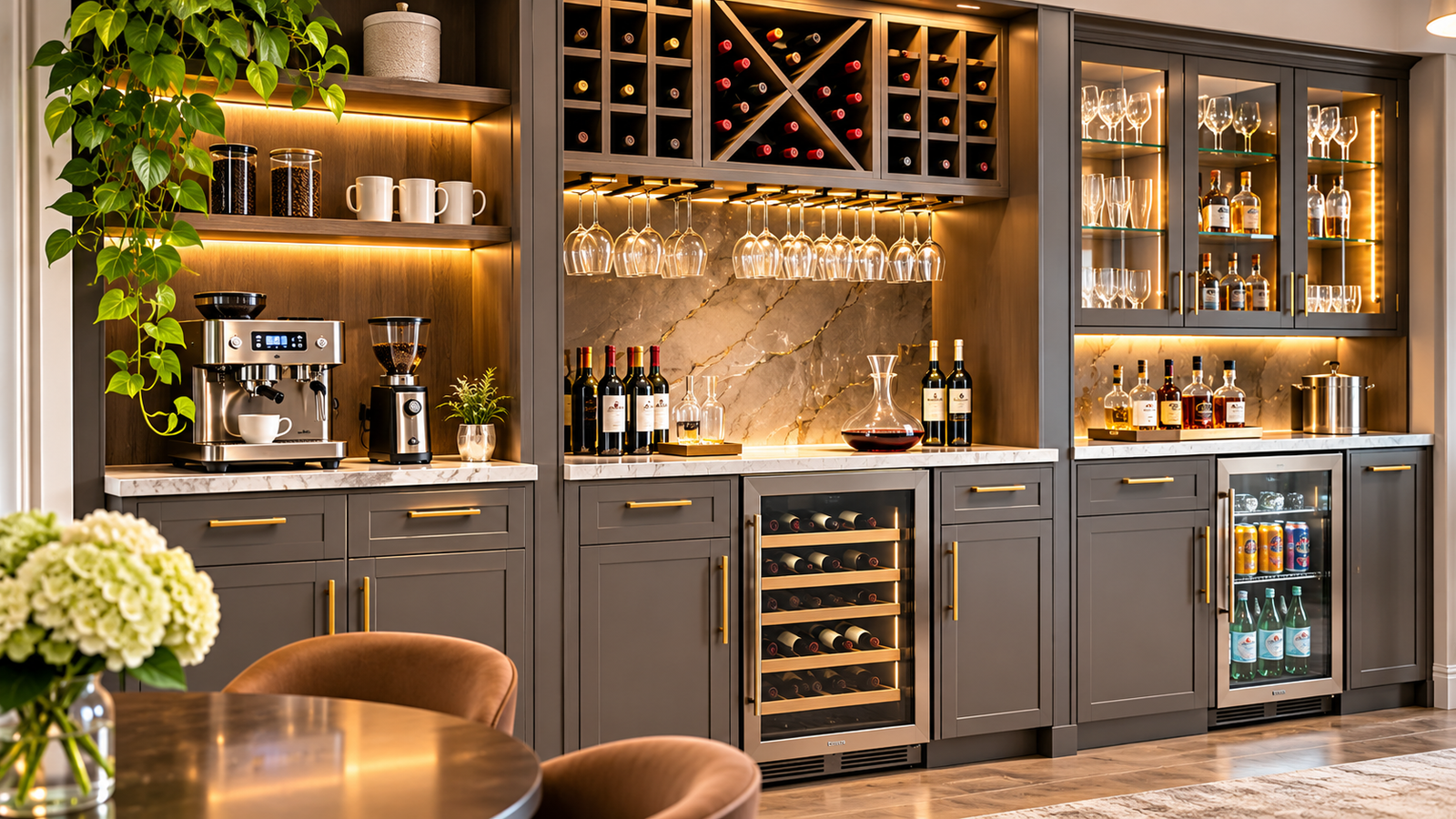
A well-designed home bar can be much more than a place to store bottles. It can become a practical coffee station, an organized beverage area, or an elegant feature that brings together your kitchen, dining room, and living space.
Whether you enjoy preparing coffee in the morning, entertaining guests on weekends, or displaying a wine collection, the right built-in storage can make your home more functional and visually appealing.
Custom cabinetry offers flexibility when planning these spaces. Instead of relying on a freestanding cabinet or a standard furniture unit, you can consider the available wall space, your storage habits, and the way you want to use the area.
At Nova Closet, custom wine bars are designed around the room, the collection, and the homeowner’s preferences. Other beverage-area concepts, such as coffee stations and general beverage storage, can also provide inspiration when planning a coordinated home storage design.
In this guide, we explore practical custom home bar ideas, including wine bars, coffee stations, beverage areas, and wet bar layouts.
1. Custom Wine Bars: Storage and Display in One Place
A custom wine bar can provide a dedicated place to store and display a wine collection while keeping glasses and serving accessories organized.
Unlike a freestanding wine rack, a built-in wine bar is designed around the available space. It can fit into a small dining-room nook, occupy part of a kitchen wall, or become a larger feature in an entertainment area.
Features to Consider in a Custom Wine Bar
A well-planned wine bar may include:
-
- Wine bottle racks: Storage designed around the size and quantity of your collection.
- Stemware holders: Dedicated spaces that keep wine glasses accessible and off the counter.
- Closed cabinets: Storage for accessories, openers, and items you prefer to keep out of sight.
- Serving counters: A convenient surface for pouring and presenting drinks when the room allows.
- Display lighting: Lighting that highlights selected bottles, glassware, and decorative details.
- Temperature-controlled cabinets: An optional feature when the design and wine-storage requirements call for it.
The best combination depends on how you use the space. A household that regularly entertains guests may prioritize a serving counter and accessible glassware, while a collector may want more dedicated bottle storage and display space.
Explore Nova Closet’s custom wine bar solutions to see how built-in wine storage, stemware holders, lighting, and cabinetry can be combined in one design.
2. Built-In Coffee Stations: Create a Dedicated Morning Coffee Area
A coffee station can make everyday routines more convenient by bringing coffee equipment, cups, and supplies together in one organized location.
Rather than leaving a coffee machine and accessories spread across the kitchen counter, a dedicated coffee area can provide a more coordinated arrangement.
Coffee Station Design Ideas
Depending on the available space and your preferences, consider these elements:
-
- Coffee machine area: A dedicated counter surface for an espresso machine, drip coffee maker, or other equipment.
- Cup and mug storage: Shelves or cabinets that keep everyday cups within easy reach.
- Accessory drawers: Storage for coffee filters, spoons, pods, and small accessories.
- Coffee bean storage: Organized containers for beans, grounds, and other supplies.
- Open shelving: A place for frequently used items or decorative accessories.
- Task lighting: Lighting that makes the preparation area easier to use.
Small Coffee Station Ideas
You do not need an entire room to create a useful coffee station. A section of kitchen cabinetry, a narrow wall, or an unused corner may provide enough space for a compact setup.
Before choosing the layout, consider the dimensions of your coffee equipment, access to electrical outlets, counter depth, and the amount of storage you need.
Planning note: Coffee stations are a design concept for a coordinated home beverage area. They should not be confused with Nova Closet’s separately advertised wine bar service. Discuss the specific cabinetry and installation requirements with the design team before assuming a particular coffee station configuration is available.
3. Beverage Stations: Organize Different Drinks in One Area
A home beverage station is a versatile concept for households that want one organized place for different types of drinks. It may combine storage for bottled water, sparkling water, soft drinks, coffee supplies, tea, glassware, and serving accessories.
The main advantage is convenience. Instead of using several unrelated cabinets, you can plan a dedicated area around the beverages and accessories your household uses most often.
What Can a Beverage Station Include?
Depending on the layout and equipment requirements, a beverage station may incorporate:
-
- Shelves for bottles and cans.
- Cabinets for glasses and mugs.
- Drawers for small accessories.
- A countertop for preparation and serving.
- Dedicated space for a beverage refrigerator, if suitable.
- Open display shelves for selected items.
A beverage refrigerator or other electrical appliance should be planned with its required dimensions, ventilation, and power access in mind.
Where Should You Place a Beverage Station?
Several locations may work well:
Kitchen: A beverage area can complement existing kitchen storage and keep frequently used drinks accessible.
Dining room: A built-in beverage station can provide convenient access when serving family and guests.
Living room: A coordinated cabinet arrangement can keep refreshments close to an entertainment area.
Basement or entertainment space: A dedicated beverage area can make hosting more convenient without requiring a full kitchen.
The best location depends on available space, plumbing or electrical requirements, and how frequently the area will be used.
4. Wet Bar Designs: A Functional Space for Entertaining
A wet bar is a home entertaining area that typically includes a counter and a sink, along with cabinetry and storage for beverages and accessories.
It can be designed as a compact feature in a basement, a dedicated entertaining area, or part of a larger living space.
Wet Bar Features to Consider
- Base cabinets for beverage and accessory storage.
- Upper cabinets or open shelves for glassware.
- A countertop for preparation and serving.
- A sink with appropriate plumbing connections.
- Space for a beverage refrigerator, where suitable.
- Lighting that complements the surrounding interior.
A wet bar requires more planning than a simple storage cabinet because plumbing, electrical access, and appliance ventilation may affect the layout.
If you are considering a wet bar, establish these requirements before finalizing the cabinetry design.
Nova Closet’s product catalog includes wet bar as a home-space category. The exact cabinetry configuration and installation requirements should be discussed during a design consultation.
5. Combine a Wine Bar with an Entertainment Center
One way to make a home bar feel like part of the overall interior design is to coordinate it with an entertainment center. For example, a living-room wall could combine a television area, closed storage, display shelving, and a dedicated wine bar section.
Using a consistent finish across the cabinetry helps the different sections look like one integrated design rather than separate furniture pieces.
Design Considerations
When combining a wine bar and entertainment center, consider:
-
- Keeping bottle storage away from heat-producing electronics.
- Planning convenient access to glassware and serving accessories.
- Including closed cabinets for items you do not want on display.
- Using display lighting selectively.
- Coordinating cabinet finishes and hardware.
- Planning cable management for televisions and other electronics.
Nova Closet also designs custom entertainment centers. A coordinated design can help connect media storage and a wine bar along the same wall.
6. Create a Beverage Area That Complements Your Kitchen Pantry
A beverage station can also be planned alongside a kitchen pantry.
This is particularly useful for households that want coffee supplies, tea, glasses, snacks, and everyday beverages in one convenient location.
For example, a pantry arrangement may include:
-
- Shelves for coffee, tea, and beverage supplies.
- Pull-out drawers for smaller items.
- Dedicated storage for mugs and glasses.
- Space for small appliances.
- A counter for preparation, where the layout allows.
A coordinated finish can help the pantry and beverage area feel like part of the same kitchen design.
Explore Nova Closet’s custom pantry storage solutions for ideas involving adjustable shelving, pull-out storage, and organized kitchen cabinetry.
7. Choosing the Right Finishes, Lighting, and Storage
The appearance of a home bar depends on more than the cabinet layout. Finishes, lighting, and hardware all contribute to the final result.
Cabinet Finishes
Consider how the cabinetry will complement nearby furniture, flooring, kitchen cabinets, and wall colors. A consistent finish can help an integrated wine bar or beverage station blend naturally into the room.
Open Shelves and Closed Cabinets
Open shelving is useful for displaying selected bottles, glassware, and decorative items. Closed cabinets provide a place for less attractive or less frequently used accessories.
Combining both creates a balance between display and practical storage.
Lighting
Lighting can make a home bar more attractive and easier to use. Consider task lighting around preparation areas and accent lighting for selected display shelves.
For wine bars, Nova Closet specifies lighting as part of the 3D design so it can be considered before fabrication and installation.
Hardware and Accessories
Drawer pulls, hinges, glass holders, and other hardware contribute to the overall appearance and functionality of the cabinetry. Choose details that complement the room while supporting how you plan to use the space.
8. How to Plan a Custom Home Bar
Before starting a home bar project, take time to identify your priorities.
Step 1: Decide How You Will Use the Space
Is the main purpose wine storage, coffee preparation, everyday beverages, or entertaining guests? Your answer will determine the type of storage and counter space you need.
Step 2: Measure the Available Area
Measure the wall, nook, or room where the cabinetry will be installed. Consider ceiling height, door openings, nearby furniture, and any existing architectural features.
Step 3: List Your Storage Requirements
Make a list of the items you want to store. For example, a wine bar may require bottle racks and stemware holders, while a coffee station may need room for a coffee machine, mugs, and accessories.
Step 4: Consider Appliances and Utilities
If you plan to include a refrigerator, coffee machine, sink, or other equipment, account for dimensions, electrical access, ventilation, and plumbing where applicable.
Step 5: Review Materials and Finishes
Choose cabinetry finishes that complement the surrounding interior and suit your preferred design style.
Step 6: Review a 3D Design
A 3D design helps you understand how the proposed cabinetry will fit the space before fabrication begins.
Nova Closet uses a 3D design process for its custom wine bars, allowing homeowners to review the layout, finishes, and storage features before production.
Plan Your Custom Home Bar with Nova Closet
A well-designed home bar can bring together storage, convenience, and style. Whether you are planning a dedicated wine bar, exploring coffee station ideas, or organizing a beverage area, the right cabinetry can help make better use of your available space.
Nova Closet designs custom wine bars around each home’s dimensions, storage requirements, and preferred finishes. The process includes a free consultation and a 3D design so you can review the proposed layout before fabrication.
If you are considering a custom wine bar or a coordinated home storage project, schedule a free design consultation with Nova Closet.
Let’s explore a design that fits your home and the way you entertain.
Frequently Asked Questions About Custom Home Bars
What is the difference between a wine bar and a wet bar?
A wine bar focuses on storing and displaying wine, glassware, and serving accessories. A wet bar generally includes a sink and a preparation counter, making it suitable for a wider range of beverage-serving activities.
Can I create a coffee station in a small kitchen?
Yes. A compact section of kitchen cabinetry or an unused corner may provide enough space for a coffee machine, mugs, and everyday supplies. The layout should account for equipment dimensions and electrical access.
What should I include in a custom wine bar?
Common features include wine racks, stemware holders, closed cabinets, serving counters, and display lighting. Temperature-controlled cabinets may also be considered when appropriate for the design.
Can a wine bar be combined with an entertainment center?
Yes. A wine bar can be designed next to an entertainment center using coordinated cabinetry and finishes. The layout should account for electronics, bottle storage, and convenient access to both areas.
Can a home beverage station include a refrigerator?
A beverage refrigerator can be included in a suitable design if the required dimensions, ventilation, and electrical access are planned in advance.
Does Nova Closet design custom wine bars?
Yes. Nova Closet designs and installs custom wine bars in Northern Virginia, Maryland, and Washington, D.C. The designs can include wine racks, stemware storage, serving counters, lighting, and selected temperature-controlled cabinetry.
How do I get started with a custom wine bar?
Start by considering your available space, storage requirements, preferred finishes, and budget. Nova Closet offers a free design consultation to discuss your project and review a proposed design.