
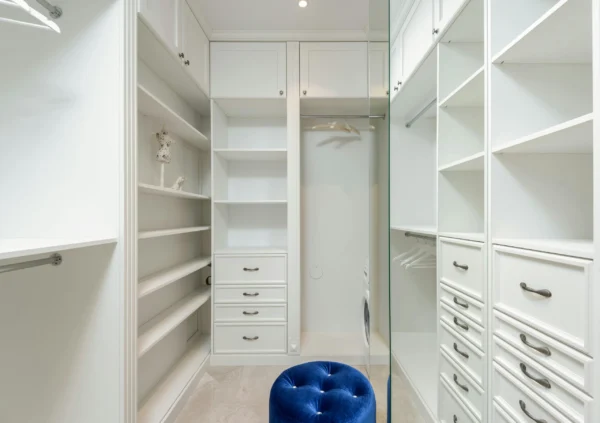
A kids closet plays an important role in keeping nursery spaces organized, safe, and easy to manage throughout early childhood years. Storage needs change quickly during the first stages of growth. Clothing sizes rotate often. Accessories increase over time. Toys and supplies require structured placement.
Parents benefit from storage systems that support flexibility and accessibility from the beginning. A well-designed closet improves daily routines and reduces clutter across the room. Custom closet planning creates storage zones that adjust with children’s changing needs while supporting safe organization habits inside the home.
Nova Closet designs storage systems that maximize space through thoughtful layout planning and built-in shelving strategies. Their approach helps parents create organized nursery environments that remain useful through toddler and school-age transitions. The following tips explain how smart storage decisions support both comfort and long-term functionality.
Why Nursery Closet Organization Matters More Than Parents Expect
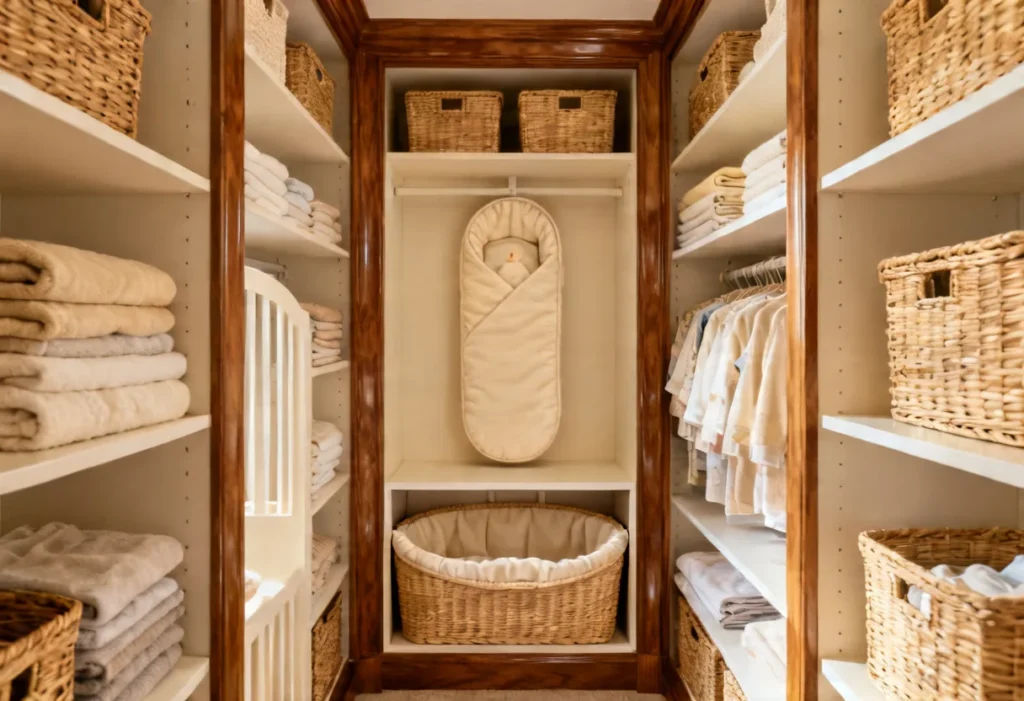
Nursery storage affects daily routines in many practical ways. Clothing changes happen several times each day. Diaper supplies require quick and reliable access. Blankets, swaddles, and seasonal items also need structured placement to stay organized and easy to locate.
Closets without planning create unnecessary movement across the room. Parents spend extra time searching for essentials during already busy moments. Closets without zoning also lead to clutter on nearby furniture surfaces such as changing tables, dressers, and chairs. Organized storage reduces these problems and keeps frequently used items within reach.
A structured kids closet helps parents maintain calmer nursery spaces throughout the day. Clear storage zones support faster access to clothing, care supplies, and accessories. Efficient layout planning improves both safety and convenience while supporting smoother caregiving routines from morning through bedtime.
Tip 1: Divide the Kids Closet into Functional Storage Zones
Closets should support multiple storage purposes to keep nursery routines simple and predictable. One section should hold daily clothing such as onesies, sleepwear, and frequently used outfits. Another section should store accessories like socks, bibs, blankets, and care essentials. A separate section should support seasonal rotation so outgrown or off-season items remain organized but out of the way.
Zoned layouts reduce searching time during clothing changes and care routines. Parents can move quickly between tasks without crossing the room or opening multiple storage areas. Clear sections also support predictable organization habits that make it easier to maintain order each day.
As children grow, these zones continue to support changing needs. Toy storage can replace diaper supplies. School items can replace early accessories. The structure stays useful without requiring major adjustments.
Nova Closet designs built-in shelving systems that support clear storage separation across vertical sections. Thoughtful zoning improves accessibility, reduces clutter across nursery surfaces, and strengthens long-term usability as storage needs evolve.
Tip 2: Use Adjustable Shelving That Grows with Your Child
Children outgrow clothing quickly during early childhood stages. Closet layouts must adapt to these changes to remain practical over time. Fixed shelving creates limitations because spacing cannot adjust as wardrobe sizes increase and storage priorities shift.
Adjustable shelving supports evolving wardrobe sizes from infant outfits to toddler clothing and later school-age apparel. Shelf positions can change as storage needs expand from folded clothing to toys, books, and accessories. This flexibility allows parents to reorganize storage zones without replacing the entire closet system.
Adjustable layouts also support changing daily routines. Early shelves may hold diapers and blankets. Later configurations can support shoes, activity supplies, or seasonal storage. Parents can reposition shelves easily to match each stage of growth.
A custom kids closet includes flexible shelving options that extend usability across multiple childhood stages. This approach supports long-term organization, reduces replacement costs, and keeps nursery storage efficient as children grow.
Tip 3: Add Double Hanging Rods for Small Clothing Sizes
Infant clothing requires less vertical space than adult clothing, which creates an opportunity to use closet height more efficiently. Double hanging rods increase storage capacity by dividing vertical space into two functional levels instead of leaving unused gaps between garments.
Upper rods can hold special occasion outfits, seasonal clothing, or items used less frequently. Lower rods provide easy access to daily clothing such as onesies, pajamas, and playwear. This arrangement keeps essential items within reach while maintaining clear organization across the closet.
As children grow, rod positions can be adjusted to support longer garments and changing wardrobe needs. This flexibility helps the closet remain useful through multiple stages of development without requiring major modifications.
Nova Closet integrates vertical planning strategies that maximize usable storage height inside compact closet layouts. Thoughtful vertical organization improves accessibility, increases capacity, and supports long-term closet functionality as storage needs evolve.
Tip 4: Include Drawer Storage for Small Essentials
Small clothing items require protected storage sections to remain easy to manage. Socks need separation to prevent mixing. Accessories such as bibs, mittens, and hats require structured placement. Baby supplies benefit from clear visibility and consistent organization.
Drawer storage supports these needs effectively by creating defined compartments for smaller essentials. Dividers improve sorting accuracy and help parents maintain predictable placement for frequently used items. Organized drawers also reduce clutter on surrounding surfaces such as changing tables and dressers.
Drawers keep everyday supplies within reach while protecting items from dust and shifting piles. This makes clothing changes faster and supports smoother caregiving routines throughout the day.
A well-planned kids closet includes integrated drawer systems that support daily routines and strengthen long-term organization as storage needs continue to evolve.
Tip 5: Create Dedicated Storage for Diaper Supplies
Diaper changes happen frequently during early childhood stages. Supplies should remain accessible within the closet layout to support fast and smooth caregiving routines throughout the day.
Dedicated shelving improves workflow efficiency by keeping diapers, wipes, creams, and extra clothing in clearly defined locations. Structured placement allows parents to reach essentials quickly without moving across the room or searching through multiple storage areas.
Accessible storage also supports safer caregiving routines. Items remain within reach during changing time. Movement stays minimal. Organization stays consistent during busy moments.
Parents benefit from storage zones designed around real caregiving habits rather than generic layouts. Thoughtful closet planning improves routine consistency and helps maintain a calm, organized nursery environment each day.
Tip 6: Reserve Upper Shelves for Seasonal Rotation
Seasonal clothing should remain accessible yet separated from daily wardrobe items to prevent overcrowding in primary storage zones. Upper shelves support rotation efficiency by creating dedicated areas for items that are not needed every day.
Winter blankets stay protected and out of the way during warmer months. Heavier clothing can remain grouped together until the season changes. Outgrown clothing can also remain organized on upper shelves until donation, storage transfer, or replacement planning begins.
Overhead storage keeps the main closet area clear for frequently used items. This separation improves visibility and helps parents maintain order during wardrobe transitions throughout the year.
A structured kids closet includes overhead shelving zones that support long-term storage organization while keeping daily-use areas simple, accessible, and easy to manage.
Tip 7: Add Open Shelving for Toy Storage Visibility
Children begin learning organization habits through visibility at an early age. Open shelving improves recognition of storage zones by allowing children to see where items belong. Clear placement supports understanding of categories such as toys, books, and clothing accessories.
Open shelving also encourages participation during cleanup routines. Children can return items to familiar locations more easily when storage sections remain visible and reachable. This builds early independence and supports consistent organization habits over time.
Toy storage inside closets prevents floor clutter across nursery spaces. Structured placement keeps pathways clear and supports safer movement throughout the room during playtime and daily routines.
Nova Closet designs shelving layouts that balance accessibility and safety inside nursery environments. Thoughtful placement helps parents maintain order while supporting children as they develop confidence in managing their own belongings.
Tip 8: Include Basket Storage for Flexible Organization
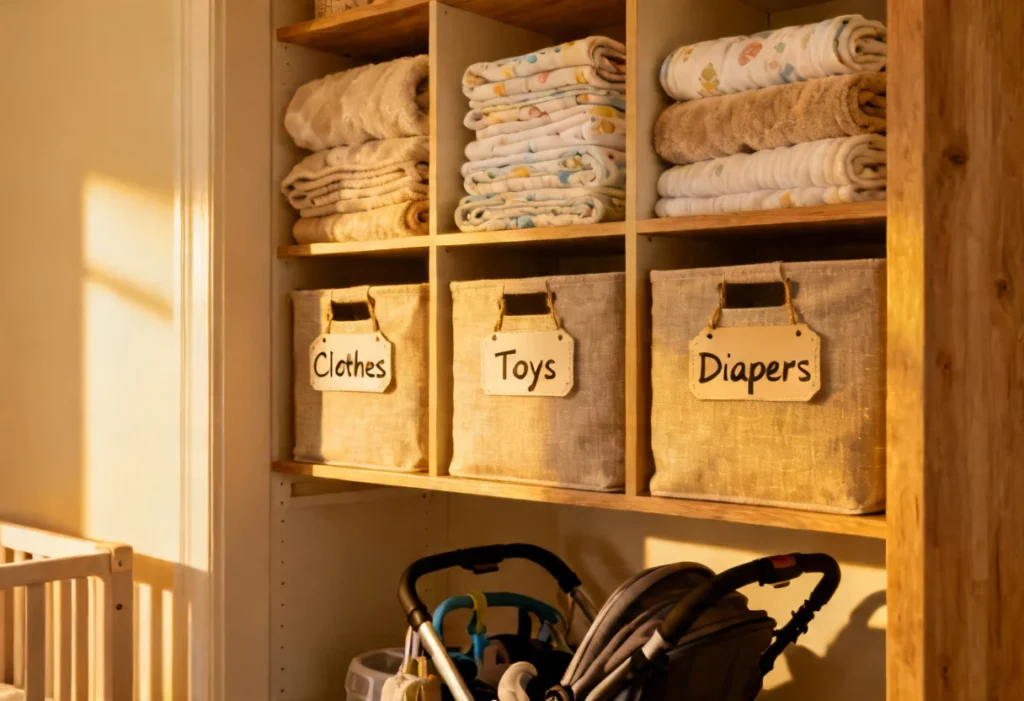
Baskets provide a simple and flexible storage solution for rapidly changing nursery needs. Soft items such as blankets, clothing, and stuffed toys fit easily inside, keeping them contained and easy to manage. Toys remain grouped together, which reduces clutter and helps maintain order throughout the room.
Portable containers also support flexible organization strategies. Parents can move baskets between shelves, changing stations, or play areas depending on daily routines. This adaptability makes it easier to adjust storage without reorganizing the entire closet system.
A custom kids closet supports basket integration through properly aligned shelving that keeps storage visually consistent. This structure maintains order while still allowing quick adjustments as storage needs evolve over time.
Tip 9: Plan Closet Layouts That Support Safety Awareness
Lower shelves should hold soft items such as clothing, blankets, and lightweight toys. These items are safer for independent access and reduce risk during early exploration. Lower placement also encourages children to participate in simple organization tasks.
Higher shelves should hold heavier or less frequently used items. This includes storage bins, seasonal clothing, and bulk supplies. Elevated placement reduces the risk of accidents and keeps weighty items out of reach.
Accessible sections should remain intentionally designed for safe interaction. Items placed within reach should be lightweight, non-breakable, and easy to return to their designated spots. This structure supports safe independence during early learning stages.
Parents maintain confidence in storage placement decisions when zones are clearly defined by function and safety level. Thoughtful organization reduces hazards while supporting daily routines.
Nova Closet designs layouts that reflect family safety priorities across nursery environments. Each system balances accessibility, structure, and long-term usability to support both parents and children.
Tip 10: Design Closet Systems That Adapt Through Growth Stages
Closet systems should remain useful beyond infancy. Storage needs evolve during toddler years and continue to expand as children reach school age. A well-planned system anticipates these changes instead of requiring frequent replacements.
Flexible shelving supports wardrobe expansion as clothing sizes increase. Adjustable layouts make it easy to reconfigure storage for new categories such as school uniforms, sportswear, and seasonal outerwear. Drawer placement continues to support organized storage for accessories, small items, and daily essentials as needs become more complex.
Hanging zones also play a key role in long-term usability. Lower rods work for infant and toddler clothing, while higher or extended rods accommodate larger garments as children grow. This adaptability keeps the closet functional across multiple stages of development.
A well-designed kids closet reduces the need for constant upgrades. It supports smooth transitions from infancy to school years while maintaining order, efficiency, and ease of use throughout childhood.
How Custom Closet Design Supports Parent Organization Habits
Organization systems influence daily routines across nursery environments. Predictable layouts reduce stress during busy schedules. Structured shelving improves accessibility and keeps essential items easy to find.
Parents benefit from storage designed for fast clothing changes and quick access to daily supplies. Diapers, wipes, clothing, and accessories remain in clear zones that support smooth caregiving routines. This reduces time spent searching and helps maintain focus during busy moments.
Custom planning improves workflow consistency by aligning storage placement with real caregiving habits. Each section serves a defined purpose, which helps maintain order throughout the day.
Nova Closet designs systems that reflect real caregiving needs. Thoughtful layout planning improves both comfort and efficiency while supporting organized, functional nursery spaces.
Why Vertical Storage Matters in Nursery Closet Design
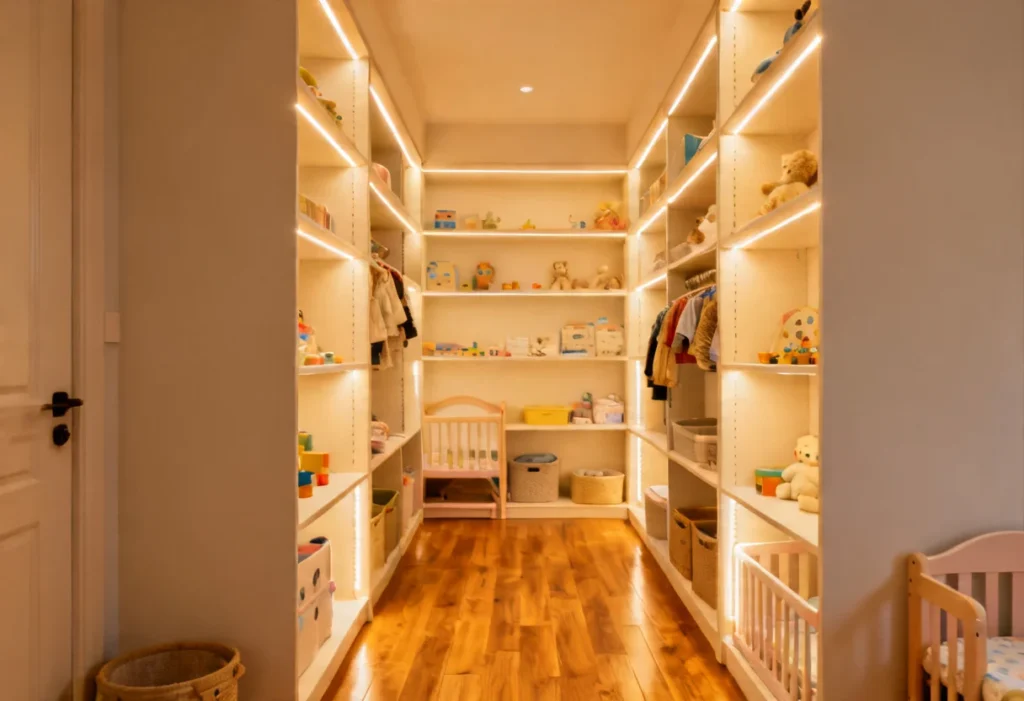
Vertical planning increases usable storage space inside compact closets. It makes full use of wall height to expand capacity without requiring additional floor area.
Upper shelving supports seasonal rotation such as outgrown clothing, extra bedding, and items used less frequently. These sections keep storage organized while freeing up easier-access zones below.
Mid-level shelving supports daily wardrobe access. Clothing, accessories, and frequently used items remain within reach, which improves routine efficiency and reduces search time during busy moments.
Lower sections support safe storage placement. Soft items, lightweight clothing, and child-accessible essentials stay positioned for easy and secure reach. This layered structure improves organization clarity and helps maintain consistent order across all categories.
A structured kids closet uses full wall height effectively without increasing room footprint, creating a more efficient and adaptable storage system for growing children.
How Custom Closet Planning Reduces Nursery Clutter
Clutter often spreads from closets into surrounding spaces. Toys move onto floors. Clothing piles onto chairs. Supplies collect on dressers and changing tables.
Structured closet layouts reduce these overflow problems by giving every item a defined storage zone. Clothing stays inside designated sections. Toys remain contained within baskets or shelves. Supplies stay organized in clearly labeled areas. This prevents items from spilling into the rest of the room.
Storage zones help maintain visual and functional balance across nursery environments. Clear organization reduces mess buildup and supports easier daily cleaning. The room feels more open, calm, and easier to manage throughout busy routines.
Nova Closet creates storage systems that improve room functionality through efficient planning strategies. Thoughtful layout design helps maintain order while supporting a more peaceful and organized nursery space.
Why Parents Benefit from Personalized Closet Layout Planning
Every nursery layout includes unique dimensions. Ceiling height affects shelving placement and vertical storage potential. Wall depth influences how drawers, hanging rods, and shelving units can be installed without limiting movement or accessibility.
Personalized planning improves storage accuracy by matching the system to the actual space available. It also improves accessibility outcomes by ensuring frequently used items remain within easy reach, while seasonal or less-used items are stored in higher or less accessible zones.
Nova Closet evaluates room structure carefully before recommending layout strategies. Each design considers measurements, daily routines, and storage needs to create a practical and well-balanced nursery system. Custom planning supports long-term organization success by ensuring the closet remains functional as children grow and storage requirements change.
In Conclusion
Nursery storage plays a major role in daily caregiving routines. Organized closets reduce clutter and improve accessibility across changing growth stages. Structured shelving supports predictable storage habits that benefit both parents and children.
A thoughtfully designed kids closet creates flexibility for clothing rotation, toy storage, and accessory organization while maintaining safe interaction spaces. Adjustable layouts make it easier to adapt as children grow, ensuring items stay properly sorted and easy to reach at every stage.
Nova Closet provides personalized storage solutions that help families maintain efficient nursery environments. Each system is designed to support organization, safety, and adaptability, allowing the closet to evolve alongside early childhood development while keeping daily routines smooth and manageable.
Your nursery deserves storage that supports comfort, safety, and organization from the very beginning. A thoughtfully designed kids closet helps simplify daily routines while preparing your home for future growth stages, where storage needs continue to change quickly.
Nova Closet creates personalized storage systems designed to maximize space, improve accessibility, and support the evolving needs of growing families. Each layout is planned to keep essentials organized, reduce clutter, and maintain a safe, functional nursery environment.
Schedule your consultation today and begin building a nursery storage solution designed around your child’s needs and your home’s layout, creating a space that grows and adapts with your family over time.