
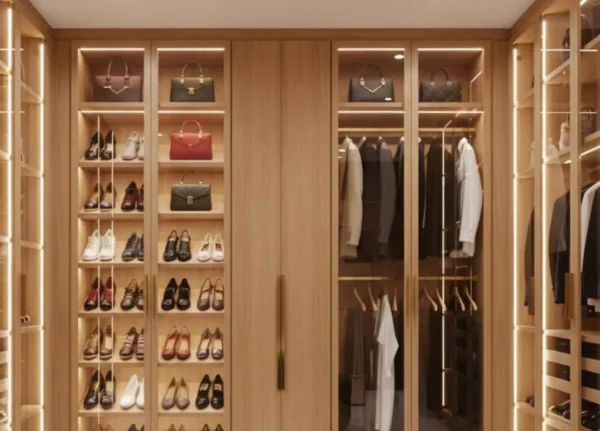
Walking into a cabinet store feels like the sensible first step, and for a standard room it often is. The trouble starts when your wall is 87 inches wide and the boxes come in 12 and 24 inch increments, because that difference has to go somewhere.
Usually it goes into a filler panel. Three inches of painted board doing nothing, in a room where you wanted storage. Multiply that across a run of cabinets and the gap between what you bought and what you could have had becomes obvious.
This guide covers what a cabinet store actually sells, where stock cabinetry falls short, how to judge construction quality in either case, what custom genuinely costs, and how to compare two quotes that look similar on paper and are not.
What a cabinet store actually sells
Most cabinet retailers work from three tiers, and the labels get used loosely enough to be worth defining.
Stock cabinets are manufactured in fixed sizes and held in inventory. Fastest to get, lowest cost, least flexible. Sizes typically step in three inch increments, so any wall that is not a multiple of those steps needs filler.
Semi-custom cabinets start from standard boxes but allow choices in door style, finish and some modifications. More flexible than stock and more expensive, but still built from a fixed size catalog underneath.
Custom cabinets are built to the dimensions of your actual space. No fixed increments, which means no filler panels and no dead corners unless the room genuinely requires them.
The gap between these tiers matters most in the rooms people think about least. A kitchen is usually a rectangle with standard appliance widths. A closet under a staircase, an alcove beside a chimney breast, or a garage wall broken by a water heater is not.
There is also a fourth category worth naming, because it confuses the comparison: flat-pack and ready-to-assemble cabinetry sold online. It is cheaper again, arrives as panels and hardware, and shifts the labor to you. That can be the right answer for a garage or a laundry room. It is rarely the right answer for a room you look at every day, because assembly quality determines whether the boxes stay square.
Where stock cabinets cost you space
Filler is the obvious one, but it is not the only one.
Depth is fixed. Stock base cabinets are built to a standard depth whether or not that suits the room. In a narrow space, four inches of unnecessary depth is four inches of walkway you lose. In a reach-in closet, it can be the difference between a door that opens fully and one that catches.
Height stops short. Most stock runs finish well below a nine or ten foot ceiling, leaving a band of dead air above that then needs soffit or trim to look deliberate. That band is often two full shelves of storage, and it is the storage most people are short of.\
Corners get written off. L-shaped runs made from fixed boxes leave a corner that is genuinely difficult to reach. Custom builds can specify a rotating unit or a properly angled cabinet instead. Nova Closet’s revolver units exist for exactly this problem.
Interior configuration is fixed. Shelf spacing, drawer depth and rod height are set by the manufacturer rather than by what you own. If your storage is mostly folded rather than hung, or mostly shoes rather than shirts, stock cabinetry will not reflect that.
Obstructions are ignored. Real walls have outlets, vents, pipes, water heaters, electrical panels and windows that do not line up with anything. A stock run works around these by leaving gaps. A custom build designs around them.
Nova Closet states plainly that they do not use standard-sized carcasses, which is the whole difference. Building to the opening rather than to a catalog is what recovers the inches a stock run gives away. Their custom closet page shows how that plays out across different room sizes.
Judging construction quality, whichever route you choose
This part applies equally to a cabinet store and a custom shop, and it is where price differences usually hide.
The box, not the door
Doors are what you see and boxes are what fails. Plywood boxes hold screws, resist sagging under load and survive humidity. Particleboard is cheaper and heavier, and once it gets wet under a sink or against an exterior wall it swells and does not recover.
Ask what the box is made of and how thick it is. Three quarter inch is the standard worth aiming for on structural panels. A showroom display will rarely volunteer this, and it is the single most useful question you can put to a salesperson.
Melamine and thermally fused laminate sit in between. Both are a decorative surface bonded to a composite core, and both perform well in closets and storage rooms where the load is clothing rather than cast iron. The core underneath is what determines longevity, so the question is still what the core is.
The joinery
Dovetailed drawer boxes outlast stapled ones by a wide margin. Cabinets assembled with cam locks and glue hold better than those relying on staples alone. Look at how the back panel attaches, since a back that is stapled into a rebate will rack over time while one captured in a groove will not.
The hardware
Hinges and slides are the moving parts, and moving parts wear.
Full extension slides let you reach the back of a drawer. Partial extension slides mean the rear third of every drawer is awkward for the life of the cabinet, which is a daily irritation you cannot fix later without replacing the hardware. Soft close is standard now rather than an upgrade, so its absence tells you something about where the budget went.
Weight rating matters more in some rooms than others. A drawer holding folded knitwear and a drawer holding tools are different problems.
There is an actual industry benchmark
The ANSI/KCMA A161.1 certification program tests cabinet doors and drawers through 25,000 open and close cycles, subjects wall cabinets to a 600 pound load test, and holds shelves under load for seven days to check for deflection.
Twenty-five thousand cycles is roughly seven openings a day for ten years. It is a floor for acceptable performance rather than a guarantee of longevity, but it gives you a number to ask about instead of a vague claim that something is well made. Certification varies by manufacturer and by product line, so ask about the specific line you are being quoted rather than assuming a brand-wide answer.
Emissions are regulated, and worth asking about
Composite wood products sold in the United States are covered by federal rules. Under EPA’s TSCA Title VI standards, hardwood plywood, medium-density fiberboard and particleboard, along with finished goods containing them, must be labeled as TSCA Title VI compliant. Products have been required to be certified by an EPA-recognized third-party certifier since June 2018.
This matters for cabinetry because a closet is an enclosed space in a bedroom, often with the door shut for most of the day. Asking whether the panels are TSCA Title VI compliant is a reasonable question, and any legitimate supplier will be able to answer it without hesitation.
It should last decades, not years
The National Association of Home Builders, in its Study of Life Expectancy of Home Components, found that kitchen cabinets are expected to last up to 50 years. That figure assumes sound construction and reasonable care.
It is a useful benchmark because it reframes the decision. Cabinetry is not a five year purchase. Spending less on a box that fails in twelve years is not a saving, particularly once you count the disruption of replacing it.
Comparing the three routes
| Stock from a cabinet store | Semi-custom | Custom built | |
|---|---|---|---|
| Fits your exact dimensions | No, filler required | Partly | Yes |
| Uses full ceiling height | Rarely | Sometimes | Yes |
| Interior configured to your storage | No | Limited | Yes |
| Handles awkward corners and alcoves | Poorly | Moderately | Yes |
| Works around outlets and obstructions | Poorly | Moderately | Yes |
| Lead time | Shortest | Moderate | Moderate |
| Cost per linear foot | Lowest | Middle | Highest |
| Cost per unit of usable storage | Often highest | Middle | Frequently lowest |
| Finish matched across rooms | Difficult | Possible | Straightforward |
| Replacement parts years later | Uncertain | Uncertain | From the original shop |
Two rows deserve attention.
The cost per unit of usable storage row is the one worth sitting with. Comparing cabinets by price per linear foot flatters stock, because it counts the filler panels as if they were storage. Comparing by usable capacity tells a different story, particularly in rooms that are not standard shapes.
The replacement parts row is the one nobody thinks about at purchase. Stock lines get discontinued. If a door is damaged in year six and the line no longer exists, you are matching a finish rather than ordering a part. A local shop that built the original still has the specification.
The rooms where custom earns its cost
Not every room needs it. These consistently do.
Closets
Reach-ins and walk-ins are almost never standard sizes, and the interior configuration matters more than in any other room. The split between long hanging and double hanging should follow what you actually own rather than a catalog assumption, and in most wardrobes full-length items are under twenty percent of the total.
Nova’s walk-in closet systems build to the opening rather than to increments, and their custom closet accessories cover the fittings that decide whether a closet works daily: valet rods, belt and tie racks, jewelry inserts and pull-out hampers.
Home offices
Desk height, monitor depth and filing needs vary by person, and a fitted home office uses wall space a freestanding desk cannot. Cable management is the detail that separates a built-in that stays tidy from one that does not, and it has to be planned rather than added. Their home office accessories cover the fittings.
Entertainment centers
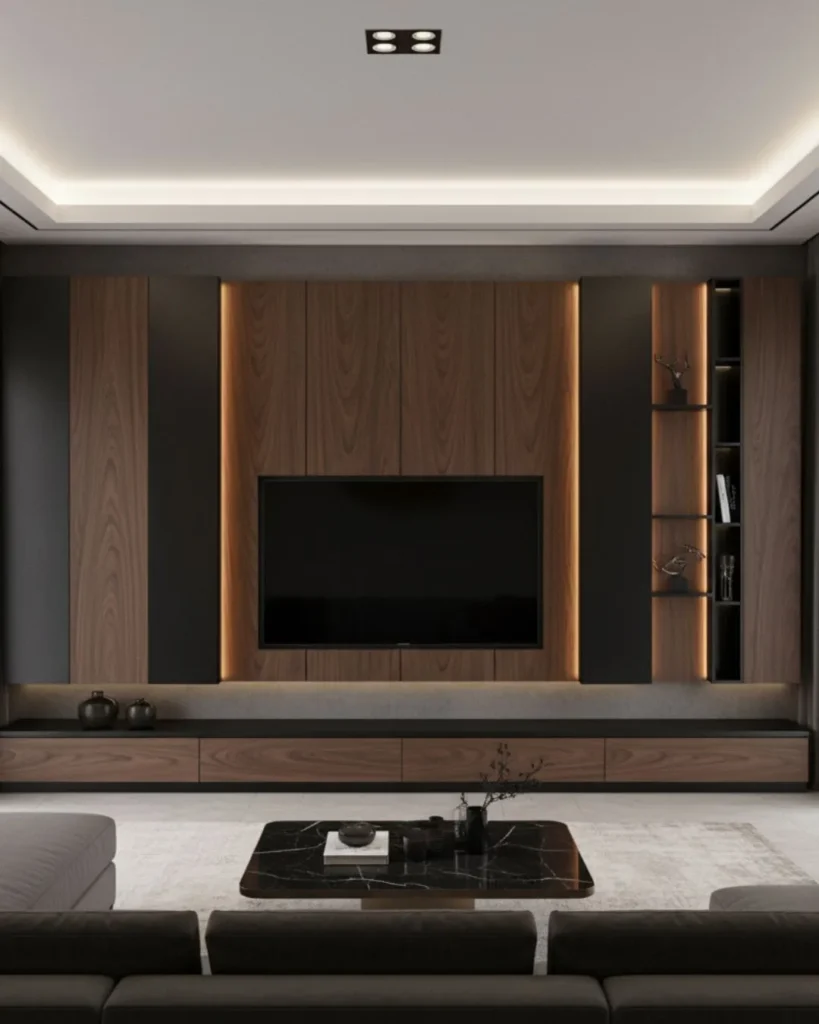
Television sizes change, cable management is specific to your equipment, and a wall of stock boxes rarely lines up with a chimney breast. Their entertainment center systems are built around the wall you actually have, including the awkward case where the fireplace is off center.
Pantries
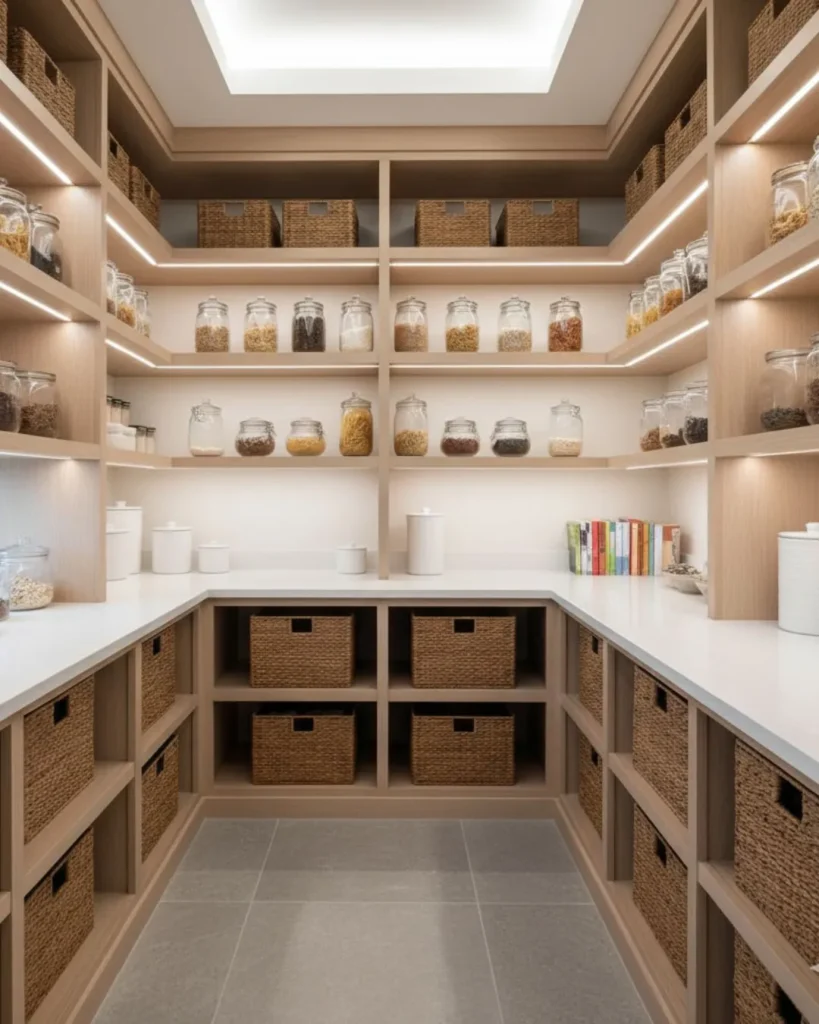
Depth is the enemy. Anything past about 14 inches and the back row becomes storage you forget you own, which is how households end up with three of the same jar. A custom pantry mixes shallow shelving at eye level with deeper roll-outs down low, and pantry accessories handle the specifics.
Garages and mudrooms
These rooms are full of obstructions: water heaters, panels, doors that swing. Stock runs work around them badly. Garages also swing between humid summers and cold winters in this region, which makes material choice more consequential than it is indoors. See their garage and mudroom solutions, along with garage accessories and mudroom accessories.
The mudroom has one rule that overrides layout: storage placed further into the house than where people naturally drop things never gets used. The bench and the first hooks need to be within a step or two of the door.
Laundry rooms
Machine dimensions vary and the counter needs to clear them exactly. A laundry room built to measure gets a continuous folding surface rather than a gap between two cabinets, plus somewhere to hang shirts straight out of the dryer. Laundry room accessories cover pull-out hampers and drying racks.
Kids’ rooms and nurseries
Children outgrow clothes constantly and do not use storage they cannot reach. A kids and nursery closet designed with a low rod they can reach, plus adjustable components that move as they grow, avoids rebuilding the room in four years.
Wall beds and wine bars
A Murphy bed has to integrate with the surrounding cabinetry to look deliberate rather than added, which is difficult with stock boxes and straightforward with a built-in. A custom wine bar has the same requirement, since bottle storage, glass racks and counter height are all specific.
Doors, finishes and the parts you actually see
Construction decides how long cabinetry lasts. Finish decides whether you like living with it.
Door style is the biggest visual decision and the one most people start with. Slab doors read modern and show less dust in the profile. Shaker sits between traditional and contemporary and has stayed popular longer than most styles, which makes it a safer choice if you plan to sell within a decade. Raised panel reads traditional and suits older homes with substantial millwork.
Finish behaves differently in different rooms. A high gloss finish reflects light, which helps a small windowless closet, and shows fingerprints, which does not help a mudroom. Matte hides marks and shows scuffs.
Nova Closet’s doors and finishes page shows the range, and their decorative hardware and trims pages cover the details that make a built-in read as part of the house rather than as furniture pushed against a wall.
One practical point on selection: look at samples in the room they are going into, at the time of day the room is actually used. Showroom lighting is designed to flatter, and a finish that reads warm under retail lighting can go flat in a north-facing bedroom.
What custom actually costs
The perception that custom is dramatically more expensive comes mostly from comparing a custom quote against the cheapest stock option rather than against a like-for-like specification.
Three things move a custom number more than anything else:
- Drawer count. A drawer is a constructed box with slides and a front, so it costs several times what a shelf costs. It is also the component people most consistently wish they had ordered more of.
- Running to the ceiling. More material and labor, but it adds the storage most people are short of. Measured per unit of storage gained, it is usually the best value decision in the project.
- Finish and doors. Painted and textured finishes sit above standard white, and adding doors to open shelving doubles the finished surfaces and adds hardware to every opening.
Layout complexity matters far less than people expect. A straightforward design in a good finish often costs less than an elaborate one in the cheapest material.
Nova Closet’s consultation form works across budget bands from under $5,000 through $5,000 to $10,000, $10,000 to $20,000, and above $20,000, which spans a fitted reach-in at one end to a full multi-room project at the other. They also publish a price match guarantee, which is worth knowing if you are holding a competing quote, and a company guarantee covering the work itself.
Where you can save without regretting it
Some economies cost nothing in the long run. Others cost you the project.
Reasonable savings: choose a standard finish rather than a premium textured one, use open shelving in sections nobody sees and reserve doors for the visible runs, skip accessories you are unlikely to use, and phase the work by room rather than doing everything at once.
False economies: cutting drawers to hit a number, stopping the system short of the ceiling, choosing a particleboard core in a room that sees humidity, and skipping lighting in a closet with no window.
How the process works
Knowing the sequence removes most of the uncertainty, and it also tells you whether a supplier is organised.
Consultation. Nova Closet offers this three ways: in your home, virtually, or at the showroom. In-home is the most useful for a first project because the designer sees the space, the light, the door swing and the obstructions rather than working from your measurements.
Design and estimate. You review a layout and a price before committing to anything. This is the stage to be particular, because changes on paper cost nothing and changes after fabrication cost a great deal.
Materials and final approval. Finish, hardware and accessories are confirmed here.
Fabrication. Nova manufactures in a local millcraft shop in Virginia, which shortens turnaround and makes mid-project adjustments practical in a way that importing does not.
Installation. Nova quotes installation at one to two days depending on size and complexity.
Their our process page covers this in more detail, and the FAQ answers the questions that come up most often.
Questions to ask before you buy anywhere
Take these to a cabinet store and to a custom shop, and compare the answers rather than the totals.
- What is the box made of, and how thick are the structural panels?
- Are the composite panels TSCA Title VI compliant?
- How are the drawer boxes joined, and are the slides full extension and soft close?
- Will this design run to the ceiling, or stop short?
- How much filler does this layout require, and where?
- Is every exposed side finished?
- What happens if a door is damaged in five years?
- What does the warranty cover, and for how long?
- Who installs it, and is installation included in this figure?
A quote that answers these is easier to trust than one presenting a single number, because you can see exactly what the cheaper option costs you.
Common mistakes
- Comparing totals rather than specifications. Two quotes can differ by thousands and describe entirely different cabinets.
- Measuring the room instead of the contents. The design has to hold what you own. Measure your hanging in linear feet before anyone visits.
- Choosing finish before construction. The finish is the part you can compromise on. The box is not.
- Forgetting the exposed sides. Unfinished end panels are a common way to shave a quote and an obvious flaw once installed.
- Assuming stock means faster. It usually does, but a stock item that is out of inventory can take longer than a custom build.
- Leaving lighting out. Easy to plan into a build, awkward and expensive to retrofit.
Frequently asked questions
Is a cabinet store cheaper than custom cabinets?
Per linear foot, usually yes. Per unit of usable storage, frequently not, because stock sizes leave filler panels and dead corners that you pay for but cannot use. The gap narrows further in rooms that are not standard rectangles, which is most rooms other than kitchens.
What is the difference between stock, semi-custom and custom cabinets?
Stock is manufactured in fixed sizes and held in inventory. Semi-custom starts from standard boxes with choices in door style, finish and some modifications. Custom is built to the dimensions of your actual space, which removes the need for filler and allows the interior to be configured around what you own.
How can I tell if cabinets are well made?
Look at the box rather than the door. Plywood holds up better than particleboard, particularly around moisture. Check whether drawer boxes are dovetailed and whether slides are full extension and soft close. Ask whether the line meets ANSI/KCMA A161.1, which tests 25,000 door cycles and a 600 pound wall cabinet load.
Are cabinet materials regulated for emissions?
Yes. Under EPA’s TSCA Title VI rules, hardwood plywood, medium-density fiberboard and particleboard, and finished goods containing them, must be labeled as TSCA Title VI compliant, and have required third-party certification since June 2018. Ask your supplier to confirm compliance for the panels in your project.
How long should cabinets last?
The National Association of Home Builders puts kitchen cabinets at up to 50 years, assuming sound construction and reasonable care. Poorly built cabinetry with particleboard boxes often shows problems inside 15 years, usually starting at the box bottoms and shelf spans.
Does custom take much longer than buying from a cabinet store?
Not as much as people expect. Stock is fastest when the item is in inventory. Custom adds design and fabrication time but removes the delays that come from ordering modifications or waiting on a back-ordered size. Nova manufactures locally in Virginia, which shortens the fabrication stage considerably compared with imported product.
Does Nova Closet make kitchen cabinets?
Nova Closet builds custom storage cabinetry including closets, home offices, entertainment centers, pantries, laundry rooms, garages, mudrooms, wall beds and wine bars. If your project is a full kitchen cabinetry replacement, confirm scope at consultation.
How long does installation take?
Nova Closet quotes installation at one to two days depending on the size and complexity of the project. Design, revisions and manufacturing happen before that, and the overall timeline is confirmed after your consultation.
Before you visit another cabinet store
The honest summary is that stock cabinetry is the right answer for standard rooms on tight timelines, and the wrong answer for anything with an awkward dimension, a tall ceiling or a specific storage requirement. Which describes most closets, most garages and most of the spaces people actually struggle with.
The test is simple. Measure the opening. If it lands on a clean multiple of the increments a cabinet store works in, stock will serve you. If it does not, you are choosing between filler panels and a build that uses the whole space.
Nova Closet manufactures in a local millcraft shop in Virginia and serves Virginia, Maryland and Washington DC, with a showroom at 14000 Thunderbolt Place, Suite K in Chantilly. Consultations are free and available in your home, virtually or at the showroom, and you can arrange a virtual meeting if a visit is not practical.
Browse the full range of custom closet solutions, see completed work in the portfolio, read what clients have said in the testimonials, or request a free estimate and we will measure the space properly before quoting anything.