Home
Free consultation Call 703 691 5195

Reach-In Closet Organization Ideas for Small Spaces In 2026

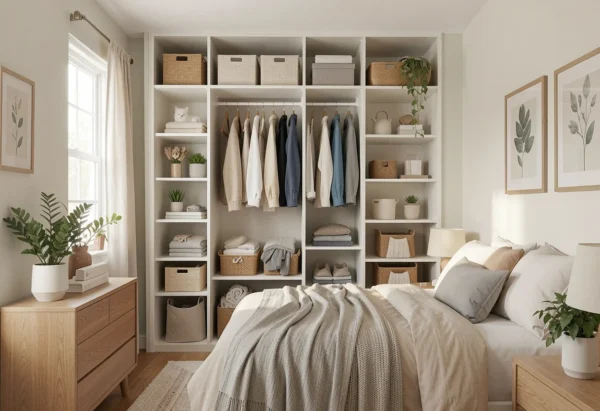
A reach-in closet may look compact at first glance, but thoughtful organization and custom storage solutions can turn it into one of the most efficient areas in a home. Many homeowners struggle with crowded shelves, stacked clothing, and limited visibility. A structured layout solves these problems. Clearly defined zones improve access to everyday items. Organized shelves, hanging sections, and drawers create a cleaner and more functional space that supports daily routines.

Modern closet systems help small closets perform like larger storage areas. Custom-built solutions from Nova Closet use shelves, rods, drawers, and accessories in a balanced layout. Each feature serves a clear purpose. Vertical space becomes more useful. Items stay visible and easy to reach. Smart planning transforms narrow closet footprints into practical storage systems that improve comfort, reduce clutter, and support long-term organization.

Why Small Reach-In Closets Benefit from Smart Organization?
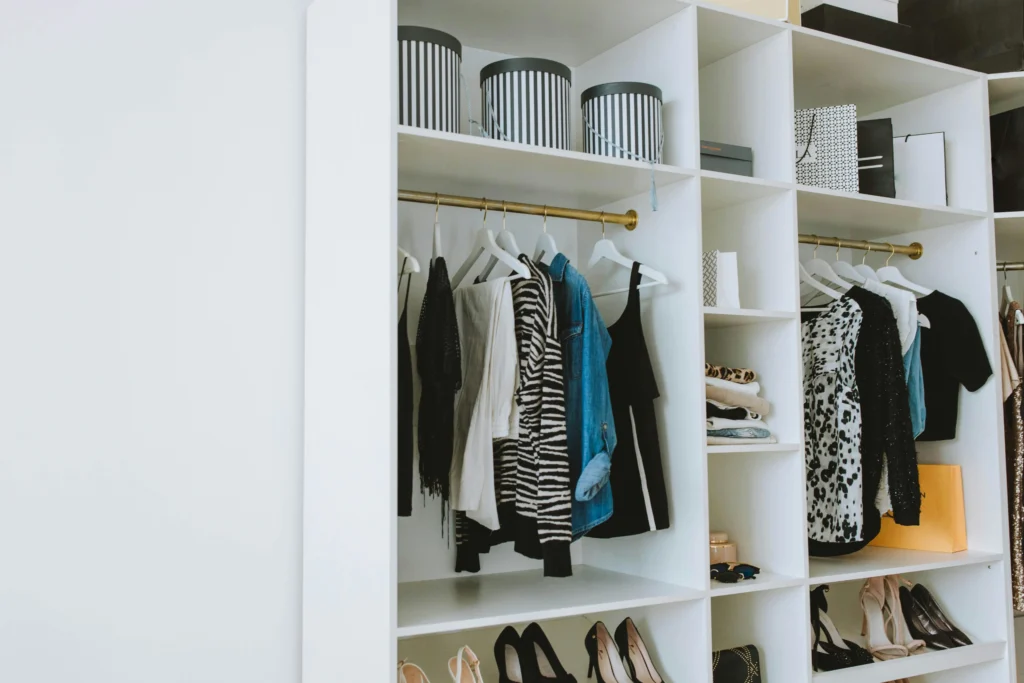
Small closets reward intentional design. Every inch should serve a clear purpose. Shelves support folded clothing. Hanging rods organize daily outfits. Drawers protect smaller accessories. Upper storage areas hold seasonal items that do not require frequent access. Defined zones reduce clutter and improve visibility.

A structured layout allows limited space to support wardrobes, accessories, and seasonal storage efficiently. Organized systems make items easier to find and maintain. Thoughtful planning turns compact closets into reliable storage areas that support daily routines and keep rooms looking clean and balanced.

The Hidden Potential Behind Compact Closet Layouts

Many reach-in closets include unused vertical space, underused corners, and inefficient single-rod layouts. These limitations reduce storage capacity and make daily organization more difficult. A custom storage plan converts overlooked areas into clearly defined zones. Shelving creates structure for folded clothing. Double-hang sections increase hanging space for shorter garments. Corner solutions improve access to items that often become hidden or crowded.

Vertical shelving, double-hang sections, and integrated drawers increase storage capacity without changing the closet footprint. Upper shelves support seasonal storage. Drawers protect smaller accessories and personal items. Organized layouts improve visibility and simplify daily routines. Smart configurations allow compact reach-in closets to function as efficient and reliable storage systems.

Daily Convenience Starts with Better Closet Flow

An organized closet reduces time spent searching for clothing and accessories. Clear storage zones keep items visible and easy to reach. Shelves support folded garments. Hanging sections separate workwear, casual clothing, and special-occasion outfits. Drawers protect smaller accessories and keep surfaces uncluttered.

Structured storage supports smoother morning routines and reduces daily frustration. Quick access to essentials saves time before work, school, or travel. A well-arranged closet also keeps bedrooms calmer and more functional by limiting visible clutter and improving overall room balance.

What Makes a Reach-In Closet Organization System Effective?
Adjustable Shelving for Changing Storage Needs

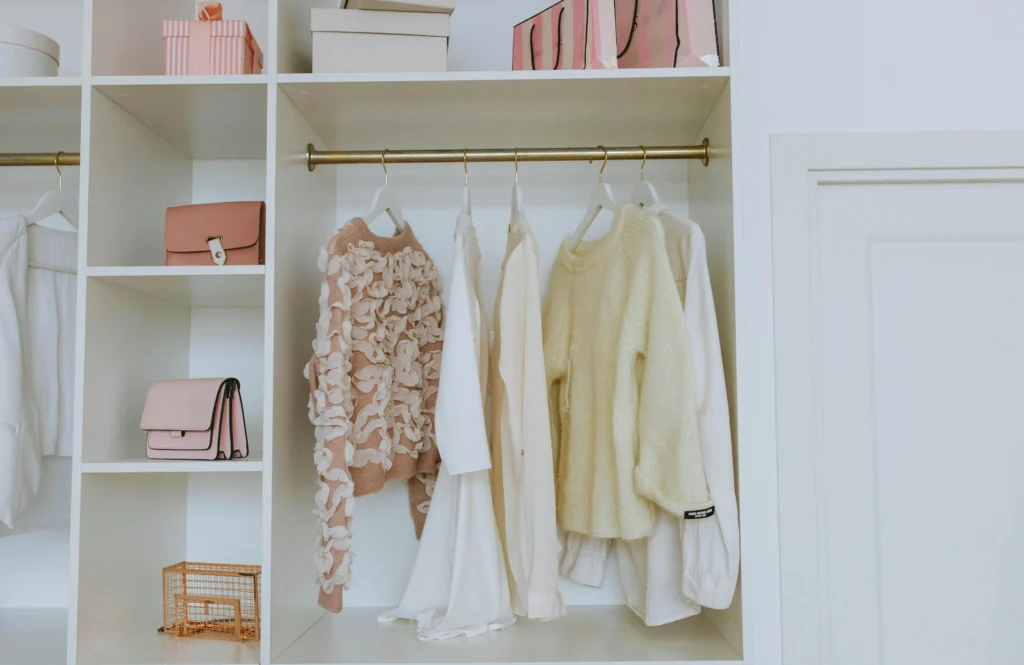
Adjustable shelving creates flexibility inside a reach-in closet and allows storage to evolve with changing wardrobes throughout the year. Shelf heights can shift to support bulky winter sweaters, folded denim, handbags, or stacked storage bins without wasting vertical space. During warmer months, shelves can move closer together to support lighter clothing and compact accessory storage. This type of adaptable layout keeps the closet organized across seasons and reduces the need to relocate items to other rooms. Adjustable shelving also supports long-term usability because the closet continues to match lifestyle changes over time.

Double Hanging Rod Configurations

Double hanging rod systems significantly increase clothing capacity inside a reach-in closet without expanding its footprint. Two hanging levels create separate zones for everyday garments such as shirts, blouses, folded trousers, skirts, and lightweight jackets. This arrangement keeps frequently used clothing visible and easy to access while preventing overcrowding along a single rod. Organized hanging sections also help maintain garment shape and reduce wrinkles. A structured double-rod layout turns a compact closet into a more efficient storage area that supports faster outfit selection each day.

Drawer Integration for Smaller Items

Drawer storage keeps smaller wardrobe essentials organized and protected from visual clutter across open shelves. Built-in drawers create dedicated compartments for belts, scarves, socks, jewelry, and undergarments so these items remain easy to locate during daily routines. Interior dividers can further improve organization and prevent items from shifting inside the drawer space. Placement at waist height supports comfortable access and encourages consistent use. Integrated drawers also give the closet a cleaner appearance by keeping frequently handled accessories stored neatly out of sight.

Smart Layout Strategies That Maximize Narrow Closet Space
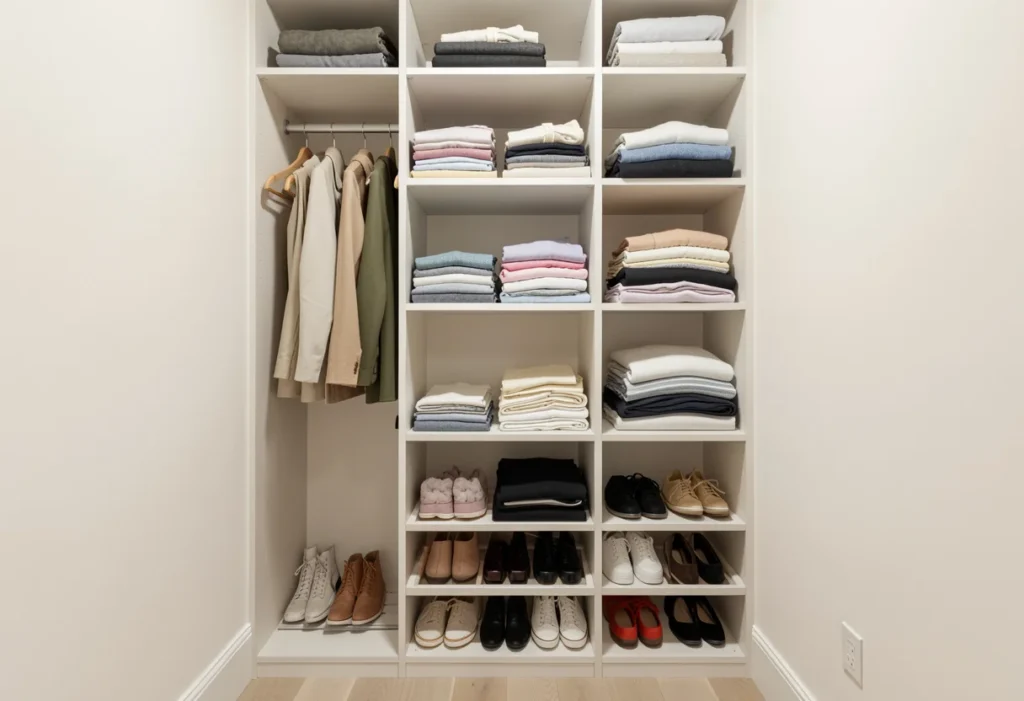
Layout decisions determine how efficiently a reach-in closet functions. A clear structure helps divide space into dedicated zones for hanging clothes, folded items, accessories, and seasonal storage. Thoughtful placement of shelves, rods, and drawers improves visibility and keeps frequently used items within easy reach. Organized layouts also reduce crowding and prevent wasted space along walls and upper sections. A well-planned arrangement supports faster daily routines and keeps the closet easier to maintain over time.

Divide the Closet into Activity Zones

Creating zones keeps items grouped logically and improves the overall function of a reach-in closet. A structured layout divides the interior into upper, middle, and lower storage sections that support clear organization and daily convenience. The upper storage zone works well for seasonal clothing, luggage, and rarely used items. This area keeps occasional-use belongings out of the main access space and preserves room for everyday essentials. The daily access zone sits at eye and arm level and holds frequently worn clothing on hanging rods and shelves.

This placement supports faster outfit selection and keeps routines efficient. The lower storage zone provides space for shoes, storage bins, and folded garments that benefit from stable placement. This structure reduces overcrowding in high-traffic areas and keeps the closet easier to maintain over time.

Vertical Storage Is the Secret Advantage of Reach-In Closets

Most reach-in closets contain unused overhead space, and using this vertical height increases storage capacity without changing the closet footprint. Installing top shelves above hanging areas creates reliable storage for items that are not part of daily routines, such as seasonal clothing, extra bedding, or travel accessories. Storage baskets placed on these upper shelves keep belongings contained, visible, and easier to manage over time. Stackable drawer towers also increase storage density by adding structured compartments inside the closet instead of placing bulky furniture in the bedroom. These towers improve visibility, support better sorting of smaller items, and help maintain a cleaner and more organized closet layout.

Custom Shelving Creates a Cleaner Closet Appearance

Closets feel more spacious when shelf dimensions match the size of the items they hold. Open shelving improves visibility and makes clothing easier to locate during daily routines. Clear sightlines support better organization habits and reduce clutter buildup over time. Shelf depth should match the type of items stored to maintain efficiency. Deep shelves work well for sweaters, blankets, and bulkier folded garments. Shallow shelves help organize accessories and smaller clothing pieces without hiding them behind stacked layers. Custom-sized shelving increases storage efficiency and helps every section of the closet serve a clear purpose.

Closet Accessories That Improve Reach-In Closet Performance

Accessories can transform a small reach-in closet into a highly functional, almost walk-in–like storage system. Thoughtful add-ons maximize efficiency and improve daily routines.

Pull-Out Shoe Racks Keep Footwear Accessible

Shoes often accumulate at the bottom of reach-in closets, making it difficult to find matching pairs. Pull-out or sliding shoe racks provide organized, dedicated storage for footwear, improving visibility and making it easier to select the right shoes quickly. This system also keeps shoes off the floor, reducing clutter and extending their lifespan.

Slide-Out Laundry Hampers Save Floor Space

Integrated slide-out hampers fit neatly into the closet layout, keeping dirty laundry contained and off the bedroom floor. They simplify the process of sorting and storing clothing before washing, making laundry routines faster and more efficient. These hampers also maintain a clean and organized closet appearance, contributing to a more serene bedroom environment.

Jewelry Organizers Prevent Tangling and Damage

Small accessories like necklaces, bracelets, and earrings can easily tangle or become damaged if stored loosely. Dedicated jewelry organizers provide compartments for each piece, keeping them visible and accessible. This ensures delicate items remain safe, while making it simple to find the perfect finishing touch for any outfit.

Together, these accessories optimize reach-in closet space, turning limited storage into a highly functional and organized wardrobe system.

Lighting Solutions That Transform Closet Visibility

Lighting transforms a reach-in closet from a cramped, dark space into a functional and inviting area. Thoughtful illumination improves visibility, accessibility, and the overall user experience.

LED Shelf Lighting Improves Daily Access

Installing LED lights along shelves brightens darker corners and highlights items stored in the back. This ensures that clothing, accessories, and smaller items are easy to see, even during early mornings or late evenings. Proper shelf lighting reduces the time spent searching for items and encourages better organization habits.

Motion-Activated Lighting Adds Convenience

Motion sensors eliminate the need to fumble for switches, activating lights automatically when closet doors open. This hands-free feature improves accessibility, especially when carrying laundry or clothing, and enhances energy efficiency by turning lights off when the space is not in use. Motion-activated lighting also adds a modern, seamless feel to the closet design.

Together, these lighting solutions make small closets feel more spacious, functional, and easy to navigate.

Door Configurations That Support Better Closet Access

Closet doors play a key role in how accessible and functional storage feels. Sliding doors save room space by allowing access to the closet without requiring clearance for swinging panels, making them especially useful in compact bedrooms. They provide a clean, streamlined look while keeping clothing and accessories easily reachable. Open closet concepts create a modern, airy feel by removing doors entirely, making the space feel larger and more integrated with the bedroom design. With carefully planned custom storage layouts, even doorless closets maintain a structured and organized appearance, ensuring that everything remains accessible, visible, and visually appealing. Together, thoughtful door choices enhance both the usability and aesthetic of reach-in closets.

Seasonal Rotation Keeps Small Closets Organized Year-Round

Closet organization improves when storage adapts to seasonal needs. Storing off-season clothing above eye level makes upper shelves ideal for keeping seasonal garments temporarily. Using storage bins protects items while keeping them accessible and easy to retrieve. Rotating wardrobes twice each year helps maintain efficiency, prevents overcrowding, and keeps everyday clothing within easy reach. Regular seasonal adjustments also simplify daily outfit selection and ensure the closet remains organized, functional, and visually appealing throughout the year.

How Custom Closet Systems Improve Reach-In Closet Efficiency

Custom solutions outperform standard shelving because they are designed around real household needs. Personalized hanging configurations support wardrobe types by providing additional rod space for longer garments or expanded shelving for folded clothing. This ensures that storage matches each homeowner’s lifestyle and clothing habits. Integrated storage eliminates bedroom clutter by giving accessories, shoes, and smaller items a designated place, reducing the need for extra dressers or storage units elsewhere. The result is a cleaner, more functional bedroom layout.

Built-in solutions increase long-term organization success because closets designed around daily routines are easier to maintain. Homeowners can keep spaces tidy consistently, making their closets both efficient and enjoyable to use over time.

Small Reach-In Closet Mistakes to Avoid

Avoiding common layout issues helps maximize storage efficiency. Overcrowding shelves reduces accessibility because tightly packed items become difficult to see and retrieve. Leaving proper spacing between folded clothes or stacked items improves usability, encourages better maintenance habits, and makes daily routines smoother.

Ignoring vertical storage opportunities limits total closet capacity, as unused upper areas go to waste. Adding shelves or stackable storage above hanging rods instantly increases flexibility, allowing for seasonal items, luggage, or rarely used belongings to have a designated spot.

Using only one hanging rod rarely accommodates modern wardrobes efficiently, especially when there are many short garments like shirts, blouses, and folded trousers. Installing a double-rod system doubles hanging space, separates clothing types, and creates a more organized and functional closet layout.

How Nova Closet Designs Reach-In Closet Systems That Work Better

Nova Closet designs professional reach-in closet systems that enhance both function and appearance by tailoring solutions to wardrobe size, room layout, storage priorities, and accessibility preferences. Their approach seamlessly combines shelving, drawers, and hanging options into balanced layouts that maximize space without overwhelming the room, supporting daily routines while maintaining a polished finish that complements the surrounding interiors.

Frequently Asked Questions (FAQs)

1. How deep should a reach-in closet be?

Most reach-in closets measure between 24 and 30 inches deep. This depth provides enough space for clothes to hang without becoming cramped or wrinkled. It also leaves room for shelving, drawers, or other accessories along the back or sides. A depth of 24 inches works well for single rows of hanging clothes, while 30 inches is ideal for bulkier items like coats or jackets. Proper depth ensures that doors or sliding panels can close easily without squeezing clothing. It also allows for better visibility and access to stored items. Planning depth carefully helps make the closet both functional and visually balanced.

2. Can a reach-in closet include drawers?

Yes, reach-in closets can include drawers as part of a custom or modular system. Integrated drawer towers are a practical way to store smaller items like underwear, socks, or accessories. They reduce the need for extra bedroom furniture, freeing up floor space and reducing clutter. Drawers can also be designed with soft-close mechanisms for convenience and a polished feel. Including drawers in the layout helps keep items organized and easy to access daily. Custom sizing ensures the drawers fit perfectly without interfering with hanging clothes. Overall, drawers make a reach-in closet much more functional and versatile.

3. What is the best layout for a small reach-in closet?

For a small reach-in closet, maximizing vertical space is key. Double hanging rods allow shorter items like shirts and pants to be stored efficiently, doubling the usable hanging area. Upper shelves are ideal for seasonal items or less-used belongings. Lower areas can be used for shoe storage, baskets, or pull-out bins to keep the floor tidy. A combination of open shelving and drawers adds flexibility for folded clothes or accessories. Keeping the layout organized and balanced prevents the space from feeling cramped. Thoughtful planning ensures that every inch of a small closet is functional while remaining visually appealing.

4. Are custom reach-in closets worth the investment?

Custom reach-in closets are often worth the investment for long-term convenience and organization. Unlike pre-made systems, custom layouts are designed specifically for your wardrobe, room dimensions, and storage needs. This increases accessibility and reduces wasted space. They can include features like adjustable shelves, drawers, and specialized compartments for shoes, handbags, or accessories. Over time, a custom closet supports better organization habits and minimizes clutter. A tailored design also enhances the overall look of your room, creating a cohesive and polished aesthetic. While the upfront cost may be higher, the functional and visual benefits often outweigh it.

5. How often should closets be reorganized?

Closets benefit from seasonal reorganizing, ideally twice a year, to match wardrobe changes. Rotating clothing with the seasons ensures that everyday items are easy to access while off-season pieces are stored efficiently. This process allows you to declutter and remove items no longer needed, keeping the space functional. It also helps identify missing storage solutions or adjustments needed for better organization. Regular maintenance prevents the closet from becoming overcrowded or messy. Taking the time to reorganize can make daily routines smoother and more enjoyable. Seasonal updates keep the closet aligned with evolving wardrobe needs while maintaining a clean, organized appearance.

In Conclusion

A reach-in closet becomes far more functional when storage is designed intentionally. With vertical shelving, double-rod configurations, integrated drawers, and thoughtful accessories, compact closets can support everyday routines efficiently while maintaining a clean visual appearance.

Custom closet systems help homeowners use space more effectively while creating storage solutions tailored to their lifestyle. With the right layout, even small closets can perform like larger walk-in designs.

Upgrade your reach-in closet with a custom storage system designed around how you live. Nova Closet creates personalized shelving, drawer towers, and hanging layouts that maximize every inch of available space. Their expert team helps transform compact closets into organized, accessible storage areas that simplify daily routines. Schedule your consultation today and discover how a smarter closet layout can improve your home.

📧 info@novacloset.com 📍14000 Thunderbolt Pl ste.k, Chantilly, VA 20151 ☎️703 691 5195

Modern Entertainment Center Designs for 2026

A modern entertainment center serves as the focal point of contemporary living spaces. It blends technology, storage, and style into one cohesive unit that supports everyday living and relaxation. Homes continue to evolve to accommodate larger screens, streaming devices, gaming systems, and smart home equipment. Entertainment center designs now reflect these changes with solutions that improve organization and visual balance. A well-designed unit keeps devices accessible while maintaining a clean and structured appearance in the room.

Bulky and generic media cabinets no longer define today’s living spaces. Modern entertainment centers feature sleek cabinetry, open shelving, and concealed storage that organize electronics and reduce visible clutter. These elements create a streamlined look that enhances the overall interior design. Custom systems from Nova Closet allow homeowners to design entertainment areas that match their layout, storage needs, and personal style. These tailored solutions support both functionality and visual impact, making the entertainment center a strong centerpiece in modern homes.

Why Modern Entertainment Centers Matter

The living room is more than a space to watch TV. It serves as a central hub for family activities, entertainment, and social gatherings throughout the day. A well-designed modern entertainment center improves organization and enhances the overall style of the space. It helps define the layout of the room and creates a comfortable environment for relaxation, conversation, and shared experiences.

Modern entertainment centers provide optimized storage for electronics, gaming consoles, and accessories. They include concealed cable management that keeps wires organized and out of sight for a clean and polished appearance. Many designs feature display areas for décor, books, and personal items that reflect the homeowner’s personality and style. A thoughtfully designed entertainment center also creates a strong focal point that supports the overall interior design of the living space. Smart TVs, streaming devices, gaming systems, and advanced sound equipment are now standard features in many homes. Entertainment centers have become essential elements that support modern lifestyles and improve how living spaces function in 2026.

Essential Features of a Modern Entertainment Center

When designing a modern entertainment center, certain features help ensure the unit remains functional, durable, and stylish over time. Strong structural materials support large televisions, speakers, and accessories with stability and safety. Thoughtful storage compartments keep devices organized and easy to access. Concealed cable management creates a clean appearance and reduces visual clutter in the living space. Adjustable shelving allows flexibility for changing technology and décor needs. Integrated lighting adds visibility and highlights display areas for books, artwork, or personal collections. A balanced layout improves comfort during daily use and supports a polished, contemporary look. These features work together to create an entertainment center that supports modern lifestyles and enhances the overall atmosphere of the home.

Integrated Storage

Storage solutions are central to modern entertainment center designs. Built-in cabinets, drawers, and shelves keep media components organized and maintain a clean, uncluttered appearance. Closed cabinets provide a place to hide DVDs, remotes, and accessories, which helps reduce visual distractions. Open shelving creates space to display decorative items, books, or frequently used devices, adding personality to the setup. Pull-out drawers offer convenient access to gaming controllers, cables, and smaller items, making everyday use more efficient. Custom systems allow homeowners to tailor storage dimensions to match the size of their devices and their personal preferences, creating a setup that feels both practical and visually cohesive.

Cable Management

With multiple devices in one setup, tangled wires can quickly become a visual distraction and reduce the overall appeal of the living space. Modern entertainment centers address this issue through built-in cable channels, hidden compartments, and wall-mounted panels that keep cords organized and out of sight. These features create a cleaner and more streamlined appearance while also improving safety and accessibility around electronic equipment. Organized wiring supports better airflow around devices and makes maintenance easier. A well-managed cable system helps maintain a polished look and strengthens the modern aesthetic of the entire entertainment area.

Adjustable Shelving

Adjustable shelving provides flexibility for changing technology and evolving storage needs over time. These shelves allow homeowners to reorganize their setup as devices change or new equipment is added. They can accommodate taller speakers, multiple gaming consoles, streaming devices, or decorative items without disrupting the overall layout. This flexibility helps maintain a clean and balanced appearance while supporting both function and style. Adjustable shelving also allows entertainment centers to adapt easily to future upgrades, making the unit more practical and long-lasting.

Durable Materials

High-quality materials ensure that a modern entertainment center withstands regular use and maintains its appearance over time. Durable construction supports large televisions, speakers, and accessories without weakening the structure. Common material options include hardwood, laminates, and engineered panels that provide strength and stability. These materials also resist scratches, warping, and everyday wear, which helps preserve a clean and polished look. Many finishes allow easy maintenance with simple cleaning, making the unit practical for daily living. Choosing reliable materials improves longevity and helps the entertainment center remain a functional and stylish centerpiece in the home.

Trending Styles for 2026

Entertainment centers in 2026 emphasize minimalism, multi-functionality, and clean lines that support a modern and organized living environment. Homeowners increasingly prefer designs that integrate seamlessly with the room while offering versatile storage for electronics, décor, and accessories. Neutral finishes, streamlined cabinetry, and concealed compartments help maintain a clutter-free appearance while improving everyday usability.

Floating Wall Units

Floating entertainment centers mount directly to the wall and create a sleek, open look that supports modern interior design. These units free up floor space and make the room appear larger and less crowded. The open area beneath the unit also allows easier cleaning and improves airflow around electronic devices. Floating designs pair well with minimalist layouts and help maintain a clean visual line across the wall.

Built-In Wall Systems

Built-in wall systems combine cabinetry, shelving, and media mounts into one cohesive structure that feels integrated with the room. These systems often include dedicated space for books, décor pieces, and hidden storage compartments that reduce visible clutter. Built-in layouts create a polished and tailored appearance that strengthens the overall design of the living space. They also provide long-term functionality by organizing multiple items within a single structured wall feature.

Modular Units

Modular entertainment centers consist of individual components that homeowners can rearrange or expand over time. This flexible design supports changing technology and evolving storage needs without requiring a full replacement. Additional shelves, cabinets, or media sections can be added as needed to match new devices or lifestyle changes. Modular systems also allow users to customize layouts based on room size and personal preferences.

Integrated Lighting

Integrated LED lighting or accent lights within shelves and cabinets enhance the visual appeal of the entertainment center and improve visibility around display areas. Lighting highlights decorative items, artwork, and architectural features while creating a warm and inviting atmosphere in the living space. It also adds depth to the design and helps the entertainment center stand out as a refined focal point within the room.

Choosing the Right Layout

The layout of a modern entertainment center affects both its functionality and the overall flow of the room. Position the unit on a primary wall to create a strong focal point and optimize viewing angles. Take into account natural lighting and seating arrangement to enhance comfort and usability. Mount or place the TV at eye level for the best viewing experience. Surrounding cabinetry should complement the TV’s size and maintain visual balance in the space. Combine open and closed storage to achieve a harmonious layout. Open shelving displays decorative items and personal touches, while closed cabinets keep electronics and accessories hidden, preserving a clean and modern aesthetic throughout the room.

Material and Finish Considerations

Materials and Finishes

Materials and finishes play a crucial role in defining both the style and durability of a modern entertainment center. The choice of materials affects the unit’s longevity, maintenance, and how well it integrates with the rest of the living space.

Wood Finishes

Natural wood or wood veneers create warmth and add a timeless, inviting touch to a room. Lighter wood tones complement contemporary or Scandinavian-style interiors, creating an airy and open feel, while darker finishes provide a sense of sophistication and elegance. Wood surfaces are versatile and can be paired with various textures, décor, and furniture styles to achieve a cohesive and welcoming design.

Laminates and High-Gloss Finishes

Laminates and high-gloss finishes give entertainment centers a sleek, modern appearance. These surfaces are polished and reflective, adding brightness and a sense of spaciousness to the room. They are also easy to clean, resist scratches and stains, and maintain their appearance over time, making them practical for households with frequent use or active family environments.

Glass and Metal Accents

Glass shelves, sliding doors, and metal hardware introduce visual interest and modern sophistication. Glass allows visibility for display items while maintaining a lightweight, open feel. Metal accents add durability and a contemporary edge, enhancing both the function and aesthetic appeal of the entertainment center. These materials combine to create a balanced and stylish focal point in the living space.

Color Coordination

Coordinating the cabinetry color with wall paint, flooring, and surrounding furniture ensures the entertainment center blends seamlessly with the room. Harmonized colors create a cohesive look that enhances the overall interior design. Subtle tones support a minimalist style, while contrasting colors can make the unit stand out as a statement piece, adding personality and character to the space.

Maximizing Functionality

Modern entertainment centers are designed to do more than simply display a TV. Optimizing functionality ensures the unit supports every aspect of a home entertainment experience, from gaming and media to décor and technology integration. A well-planned center improves organization, accessibility, and comfort while enhancing the visual appeal of the living space.

Gaming and Media Storage

Dedicated compartments for gaming consoles, controllers, and accessories help keep the entertainment area organized and clutter-free. Shelves and drawers provide easy access to frequently used items while ensuring that cables, discs, and small peripherals are neatly stored. This organization allows for a seamless gaming experience and reduces setup time for different activities.

Sound System Integration

Shelving and cabinetry can accommodate speakers, subwoofers, and soundbars while supporting proper ventilation and acoustic performance. Thoughtful placement enhances audio quality throughout the room and prevents overheating of equipment. By integrating sound systems into the design, homeowners can enjoy immersive entertainment without compromising style or functionality.

Multi-Purpose Surfaces

Cabinet tops and shelves serve as versatile surfaces for décor, plants, or personal items, adding personality and warmth to the living space. Pull-out surfaces or built-in desks can double as workstations, media control areas, or temporary tables for snacks and beverages. Multi-purpose design increases the utility of the entertainment center, making it both functional and visually engaging.

Smart Technology Integration

Modern units often include charging stations, USB ports, or hidden power outlets to accommodate multiple devices conveniently. These features allow smartphones, tablets, and other electronics to remain powered and organized without visible clutter. Integrating smart technology makes the entertainment center a hub for both media consumption and everyday digital needs, keeping the space efficient, clean, and connected.

The Role of Custom Entertainment Centers

Custom entertainment centers, like those offered by Nova Closet, allow homeowners to design units that fit the exact dimensions of their room and meet specific storage and lifestyle needs. These tailored systems combine functionality, style, and efficient use of space to create a polished centerpiece for any living area.

Tailored Dimensions

Custom cabinetry ensures that every inch of wall space is used efficiently. Cabinets, shelves, and media compartments are built to fit perfectly, eliminating awkward gaps and dead space. This approach maximizes storage capacity while maintaining a clean, organized look.

Personalized Storage Solutions

Custom designs offer storage solutions that match the homeowner’s lifestyle and technology requirements. Pull-out drawers provide easy access to gaming consoles, controllers, or media devices, while concealed cabinets hide equipment, cables, and accessories. Each element is designed for convenience and usability, keeping the entertainment area functional and clutter-free.

Aesthetic Cohesion

Custom units can be tailored to align with the home’s interior style, from modern minimalism to warm, traditional décor. Coordinated finishes, colors, and materials create a cohesive and visually appealing living space. The result is an entertainment center that blends seamlessly with the room while serving as a stylish focal point and a highly functional hub for media and technology.

Why a Modern Entertainment Center is a Smart Investment

Investing in a high-quality entertainment center provides long-term benefits that go far beyond aesthetics. A well-designed unit transforms the living room into an organized, functional, and stylish hub for family, friends, and everyday activities. It supports media, gaming, décor, and storage needs while enhancing the overall flow and comfort of the space. Custom, modern cabinetry also adds appeal for prospective buyers, showcasing a thoughtfully designed interior that reflects attention to detail and contemporary style. Using durable materials and quality construction ensures the entertainment center remains functional, attractive, and reliable for many years. This combination of style, practicality, and longevity makes a high-quality entertainment center a valuable addition that enhances both daily living and the long-term value of the home.

In Conclusion

Modern entertainment centers in 2026 combine form and function, transforming living rooms into organized, visually appealing spaces. By incorporating cabinetry, open shelving, and thoughtful technology integration, homeowners create units that accommodate media, décor, and electronics while maintaining a clean, streamlined aesthetic. These designs support both everyday use and special gatherings, making the living room a versatile and inviting hub for family and friends.

Custom solutions, such as those offered by Nova Closet, allow homeowners to design entertainment centers tailored to their exact space, storage needs, and lifestyle. Features like cable management, adjustable shelving, and integrated lighting enhance usability and organization while maintaining style. A modern entertainment center in 2026 is more than furniture—it serves as the centerpiece of a home’s entertainment experience, combining practicality, aesthetics, and adaptability to support contemporary living.

If your living space feels cluttered or outdated, a custom entertainment center can transform it into a modern, organized hub. Nova Closet designs tailored units that combine sleek storage, cable management, and integrated shelving for maximum functionality. Our team works closely with homeowners to create entertainment centers that complement your style while supporting technology and storage needs. Schedule a consultation today to discover how a modern entertainment center can elevate your living room in both form and function.

Garage Cabinets vs Open Shelving: Which Is Better?

Garage cabinets provide an effective way to convert a cluttered garage into a clean and organized workspace. Many homeowners also consider open shelving as a practical storage option. Each system offers clear advantages. The best choice depends on how the garage functions and the types of items stored inside the space.

Garages serve many purposes in modern homes. The space often stores tools, sports equipment, seasonal decorations, gardening supplies, and extra household items. These belongings accumulate quickly without a clear storage structure. Piles form on floors and work surfaces. The result is disorder that limits usable space and reduces efficiency.

A well-planned storage system restores order and improves functionality. Cabinets create enclosed storage that protects items from dust and visual clutter. Open shelving provides quick access and strong visibility for frequently used tools and supplies. Both solutions support better organization when used correctly.

Custom garage systems from Nova Closet help homeowners organize storage according to daily needs. Professional design focuses on layout, accessibility, and long-term durability. A structured approach makes it easier to store tools, equipment, and seasonal items in a logical arrangement. Understanding the benefits of cabinets and open shelving helps homeowners choose a system that supports organization, efficiency, and everyday convenience.

Why Garage Storage Design Matters

The garage is often the most overlooked storage area in the home. Clutter accumulates quickly in this space. Tools, sports equipment, seasonal decorations, and household items begin to pile up without a clear system. Disorganization reduces available space and makes it difficult to locate important items.

A well-planned storage system improves both function and safety. Organized storage allows homeowners to locate tools and supplies quickly. Proper placement protects equipment from damage. Structured storage frees up valuable floor space and creates clear pathways for movement. A clean layout also supports a healthier and more manageable environment.

Storage solutions such as cabinets and shelving provide the structure needed to maintain order. These systems keep items accessible while reducing visual clutter. The result is a garage that functions as a practical workspace instead of a crowded storage zone.

Understanding Garage Cabinets

Garage cabinets are enclosed storage units that hold tools, automotive supplies, chemicals, and household equipment. These cabinets often mount along garage walls or integrate into full storage systems that maximize wall space. Enclosed storage keeps items protected and maintains a cleaner appearance throughout the garage.

Custom cabinets from Nova Closet include practical features that support efficient organization. Many systems combine drawers, adjustable shelves, and tall compartments that store larger equipment such as power tools, ladders, and garden supplies. This structured layout gives each item a dedicated place and helps homeowners maintain an orderly garage workspace.

Key Features of Garage Cabinets

Modern garage cabinets include several practical features that support organization, safety, and durability in busy garage environments.

  • Lockable doors for secure storage
    Lockable cabinet doors protect hazardous materials, sharp tools, and automotive chemicals. This feature helps prevent unauthorized access and improves safety in households with children or pets. It also provides peace of mind when storing valuable tools and equipment.
  • Adjustable shelves for different tool sizes
    Adjustable shelving allows homeowners to modify cabinet space based on the size of the items stored. Power tools, storage bins, and tall containers require different shelf heights. Flexible shelving makes it easy to reorganize the cabinet layout as storage needs change.
  • Durable materials designed for garage environments
    Garage cabinets use strong materials that resist moisture, temperature changes, and daily wear. Quality construction protects stored items and ensures the storage system remains stable and long-lasting even in demanding garage conditions.
  • Integrated drawers for small parts and hardware
    Built-in drawers create organized storage for screws, nails, drill bits, and other small hardware. These compartments prevent small items from getting lost and allow quick access during repairs or projects.

Together, these features allow homeowners to store a wide range of tools and supplies while keeping everything neatly concealed behind cabinet doors.

Advantages of Garage Cabinets

Cabinets offer several advantages for homeowners who value a tidy and structured storage environment. Enclosed storage keeps tools, equipment, and household supplies out of sight, which creates a cleaner and more organized appearance. Cabinets also protect items from dust, moisture, and accidental damage that often occur in busy garage spaces. Many systems include adjustable shelves, drawers, and tall compartments that allow homeowners to organize items based on size and frequency of use. This structure makes it easier to maintain order, locate tools quickly, and keep the garage functioning as an efficient workspace.

Clean and Organized Appearance

One of the most noticeable advantages of garage cabinets is the sense of visual order they create. Storage doors conceal tools, supplies, and equipment, which gives the garage a cleaner and more structured appearance. Organized cabinetry reduces visible clutter and creates a more professional and functional environment.

This benefit is especially valuable for homeowners who use the garage as a workshop, hobby area, or extended living space. A tidy layout supports better focus during projects and makes the space more comfortable for daily use. Cabinets also help maintain consistency in the overall design of the garage, allowing the space to feel organized, purposeful, and easy to maintain.

Protection from Dust and Debris

Garages collect dust, dirt, and debris from vehicles, outdoor equipment, and daily activity. These conditions affect tools and supplies stored in open areas. Cabinet doors create a protective barrier that shields items from exposure to these elements.

Enclosed storage helps maintain cleaner equipment and supplies. Power tools, automotive products, and maintenance materials remain protected from dust buildup and accidental spills. Organized cabinets also prevent loose debris from settling on stored items. This protection helps extend the lifespan of tools and keeps equipment ready for use whenever needed.

Safer Storage for Chemicals

Many garages store potentially hazardous items such as motor oil, fertilizers, paint, and cleaning products. Cabinets provide secure storage that keeps these materials safely out of reach of children and pets.

Lockable cabinet doors offer an additional layer of protection, preventing accidental access to dangerous substances. This feature gives homeowners peace of mind while maintaining an organized and safe garage environment. By combining secure storage with a structured layout, cabinets make it easier to handle hazardous materials responsibly and reduce the risk of accidents.

Efficient Use of Wall Space

Custom cabinet systems can extend from floor to ceiling, fully utilizing vertical wall space while keeping the garage floor open for vehicles and work areas. Tall cabinets provide ample storage for large tools, seasonal equipment, and bulky items without sacrificing floor accessibility.

This vertical storage strategy improves organization and makes it easier to reach stored items. By keeping walkways clear and maximizing every inch of space, homeowners maintain a functional garage layout that supports both storage and daily activity.

Potential Limitations of Garage Cabinets

Cabinets provide many benefits, but they are not always the ideal solution for every garage. One limitation is reduced visibility. Items stored behind cabinet doors are hidden, which can make it harder to locate specific tools or supplies. Homeowners who need frequent access to equipment may prefer open storage that keeps items in plain sight. Cabinets also involve a higher initial investment.

Custom systems typically cost more upfront than basic shelving units, though many homeowners find the added durability and organization worth the expense. Another consideration is a fixed storage layout. Once cabinets are installed, changing the arrangement requires more effort than moving freestanding shelves. Careful planning before installation ensures the system meets long-term storage needs and minimizes the need for adjustments.

Understanding Open Shelving

Open shelving provides a popular alternative for garage storage. Unlike enclosed cabinets, open shelves keep items exposed, allowing direct access and quick retrieval. Shelving systems can be freestanding or wall-mounted and are ideal for storing bins, boxes, and frequently used tools.

Key characteristics of open shelving include wide horizontal surfaces for large or multiple items, adjustable shelf heights to accommodate different sizes, simple installation for flexible placement, and full visibility of stored materials. This design lets homeowners see and reach items instantly, eliminating the need to open doors and improving efficiency in busy garages.

Advantages of Open Shelving

Open shelving provides several practical benefits for homeowners who prioritize quick access to tools and equipment. Items remain visible and within reach, which reduces the time spent searching through storage. Wide, unobstructed surfaces accommodate bins, boxes, and frequently used supplies. Adjustable shelves allow customization for different item sizes, and wall-mounted or freestanding designs can fit a variety of garage layouts. This approach keeps tools and materials organized while supporting efficiency and ease of use in daily projects.

Immediate Accessibility

Open shelving keeps tools and supplies fully visible, making it easy to locate items quickly without rummaging through cabinets. This constant visibility reduces wasted time and streamlines workflow. In workshops or garages where tools are used frequently, open shelves enhance efficiency, allowing homeowners to access equipment immediately and maintain an organized, functional workspace.

Flexible Storage

Open shelving systems offer flexibility that adapts to changing storage needs. Homeowners can adjust or reconfigure shelves, adding or removing levels to fit tools, bins, and equipment of varying sizes. This adaptability makes open shelving a practical choice for garages that store a mix of seasonal items, frequently used tools, or growing collections. It allows the space to remain organized and functional even as storage demands evolve over time.

Lower Cost

Basic shelving units offer an affordable alternative to custom cabinetry. They provide a simple and cost-effective way to organize tools, bins, and other garage items. For homeowners seeking a budget-friendly storage solution, open or freestanding shelves improve accessibility and maintain order without a large upfront investment. These units allow for quick installation and flexible use, making them a practical choice for garages with limited budgets.

Ideal for Large or Bulky Items

Open shelves accommodate larger or irregularly shaped items, such as storage bins, coolers, or sports equipment, more easily than enclosed cabinets. The wide, unobstructed surfaces keep these objects accessible and organized without the need for custom compartments. This design allows homeowners to store bulky items efficiently while maintaining quick access and a tidy garage layout.

Drawbacks of Open Shelving

Open shelving offers convenience, but it also presents certain challenges. Exposed shelves make all stored items visible, which can create visual clutter if objects are not arranged neatly. Using labeled bins and containers helps maintain order and keeps the space looking organized. Items on open shelves collect dust more quickly than those stored in cabinets, requiring periodic cleaning to keep tools and equipment in good condition. Open shelving provides limited protection for fragile tools, chemicals, or sensitive materials. Homeowners who need to safeguard these items may prefer enclosed cabinet storage.

Comparing Garage Cabinets and Open Shelving

Selecting between cabinets and open shelving depends on the garage’s function and the types of items stored. Cabinets work well for hazardous materials, fragile tools, or items that require a tidy appearance. Open shelves suit frequently used equipment, large bins, or items that benefit from quick visibility and access. Understanding storage needs and daily routines helps homeowners choose the system that best supports organization, efficiency, and long-term usability.

Organization and Appearance

Garage cabinets create a visually cleaner and more organized environment by keeping tools, supplies, and equipment hidden behind doors. Concealed storage reduces the appearance of clutter and gives the garage a polished, orderly look. In contrast, open shelving exposes all stored items, which can make even small piles appear messy. Maintaining a neat appearance on open shelves requires careful arrangement, labeled bins, and regular tidying. Cabinets provide a simple solution for homeowners who prefer a streamlined, professional-looking garage while still keeping everything accessible.

Accessibility

Open shelving provides quicker access to tools and equipment because all items remain visible on the shelves. Homeowners can locate what they need instantly without moving other objects or searching behind doors. Cabinets, on the other hand, require opening doors to reach stored items, which adds an extra step to the retrieval process. While cabinets offer protection and a cleaner appearance, open shelving maximizes efficiency for frequent use and immediate accessibility.

Protection

Cabinets shield tools, equipment, and supplies from dust, dirt, and debris, keeping items cleaner and better preserved over time. Open shelves leave stored items exposed, allowing dust and particles to settle more easily. This exposure may require more frequent cleaning to maintain tools in good condition. Cabinets provide a protective barrier that extends the lifespan of stored items and helps maintain a more hygienic and organized garage environment.

Storage Capacity

Both cabinets and open shelving can offer substantial storage capacity when designed effectively. Cabinets often include drawers, adjustable shelves, and specialized compartments that keep tools and smaller items organized. Open shelves provide wide, unobstructed surfaces that easily accommodate larger containers, bins, or bulky equipment. By choosing the right system for specific storage needs, homeowners can maximize space while maintaining an organized and functional garage.

Combining Cabinets and Shelving for the Best Results

Many homeowners achieve the best garage organization by combining cabinets and open shelving. Cabinets store tools, chemicals, and fragile items securely while maintaining a clean, uncluttered appearance. Shelves provide easy access to frequently used equipment, large bins, and bulky items. This hybrid approach maximizes storage capacity, keeps the garage organized, and balances protection with accessibility for everyday use.

Strategic Placement

For example, cabinets can store chemicals, small tools, and equipment that need protection, keeping them safe and out of sight. Open shelves can hold storage bins, sports gear, or large containers, providing quick access to frequently used or bulky items. This combination balances accessibility with organization, creating a garage that is both functional and visually tidy.

Integrated Storage Systems

Custom garage storage providers like Nova Closet design systems that integrate both cabinets and open shelving into a single layout. This approach maximizes storage efficiency by combining secure, enclosed spaces with easily accessible shelves. Homeowners benefit from a structured and organized garage that keeps tools, equipment, and bulky items neatly stored while maintaining a clean and functional workspace.

Tips for Maintaining an Organized Garage

Once a garage storage system is installed, maintaining order depends on a few simple habits. Using storage bins keeps small items grouped together and prevents shelves from becoming cluttered. Labeling containers allows homeowners to identify stored items quickly and encourages family members to return items to their proper place. Periodically decluttering by reviewing stored tools, equipment, or supplies ensures that the garage only holds what is needed. These straightforward practices help maintain organization, extend the life of the storage system, and keep the garage functional and efficient over time.

In Conclusion

Garage organization is essential for maintaining an efficient and functional home. Cabinets and open shelving each provide valuable storage solutions with unique advantages.

Garage cabinets offer enclosed storage that protects tools, reduces visual clutter, and enhances safety. Open shelving provides quick access and flexible space for larger items, making frequently used equipment easy to reach. Combining these systems thoughtfully creates a balanced garage environment that supports daily tasks and keeps everything within reach.

Custom storage solutions let homeowners design a garage tailored to their routines and storage requirements. By choosing the right mix of cabinets and shelving, a disorganized garage transforms into a practical, organized, and visually appealing space that functions smoothly for years.

If your garage feels crowded or disorganized, the right storage system can restore order and functionality. Nova Closet designs custom garage solutions that combine durable cabinets, shelving, and tailored storage features. Their design specialists work with homeowners to create layouts that maximize space while keeping tools and equipment easily accessible. Schedule a consultation to explore storage options that will help your garage operate as an efficient and well-organized workspace.

Small Home Wine Bar Ideas That Maximize Every Inch

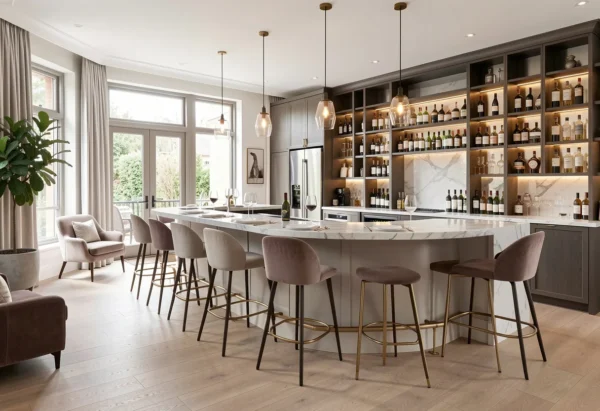
Adding a custom wine bar to a compact area in your home can boost both functionality and charm, giving you a dedicated space for storing and enjoying your favorite bottles. Even in smaller homes, condos, or apartments, a well-designed wine bar can transform an underused corner, alcove, or wall into a refined focal point. With thoughtful planning and smart use of space, a wine area becomes more than a storage solution, it becomes a personalized destination for relaxing evenings, casual entertaining, and showcasing your collection.

A compact wine bar does not require a large footprint to make a strong impact. Through creative cabinetry, vertical storage, integrated lighting, and multi-purpose surfaces, you can design a setup that feels intentional rather than improvised. The key lies in balancing capacity with accessibility, ensuring bottles are stored properly while keeping glassware, tools, and serving space within easy reach. When done well, even the smallest wine station feels organized, elegant, and inviting.

In this article, we explore practical design solutions, smart organization tips, and creative layout strategies for crafting a small home wine bar that accommodates your collection without overwhelming your living area. Whether you are a casual enthusiast or a growing collector, you will discover how to create a stylish, space-efficient wine bar tailored to your home and lifestyle.

Why a Wine Bar Matters in Your Home

A wine bar brings together storage, display, and convenience in one intentional space, allowing your favorite bottles, glassware, and accessories to stay organized and within easy reach. Rather than scattering wine across kitchen cabinets or dining room shelves, a dedicated setup creates structure and purpose. Whether nestled in a dining room corner, integrated into a living area built-in, or tucked inside a custom closet, a thoughtfully planned wine bar enhances both efficiency and atmosphere. It becomes a natural gathering point, ready for casual evenings at home or effortless entertaining when guests arrive.

When designed correctly, a wine bar works with your space limitations instead of competing against them. Smart shelving accommodates bottles of various shapes and sizes, while built-in racks, drawers, or cubbies provide secure storage for stemware, corkscrews, decanters, and serving trays. Vertical space can be optimized, and compact countertops can double as prep or serving areas. The result is a streamlined system that replaces cluttered shelves with a cohesive, visually appealing focal point. More than just storage, a well-designed wine bar introduces order, style, and everyday convenience into your home.

Planning Your Small Home Wine Bar

Good planning is the foundation of any successful wine bar design project. Before construction or installation begins, taking time to evaluate your space, your collection, and your design priorities will ensure the finished result is both functional and visually cohesive.

1. Identifying Your Space

Start by looking for underutilized areas in your home that can be transformed without disrupting primary living zones. Vertical wall space, hallway nooks, alcoves near dining areas, and built-in cabinetry are all strong candidates. Many small home wine bar ideas successfully utilize corners, the space beneath staircases, or even closets that can be repurposed into compact wine stations. The key is to assess ceiling height, nearby lighting, electrical access (if refrigeration is needed), and traffic flow. A well-placed wine bar should feel integrated into the home rather than added on. With thoughtful layout planning, even a modest footprint can support efficient bottle storage, glass organization, and a small serving surface.

2. Assessing Your Collection

Understanding the size and nature of your wine collection is essential before designing storage. Consider how many bottles you typically keep on hand and whether your collection fluctuates seasonally or continues to grow. A modest collection may only require under-counter racks paired with hanging glass holders, while a larger or expanding collection benefits from adjustable shelving and modular racks. Think about bottle variety as well, standard bottles, Champagne, magnums, and specialty shapes require different spacing. Planning ahead allows your wine bar to scale with your collection rather than outgrow it. Flexibility in shelf height and rack configuration ensures long-term usability and prevents overcrowding.

3. Choosing the Right Wine Bar Elements

A successful wine bar balances functionality with personal style. Wine racks should hold bottles horizontally to maintain cork moisture and preserve quality. Custom shelving should be precisely measured to fit stemware, decanters, cocktail tools, and accessories without wasted space. If room permits, incorporating a small serving counter provides a dedicated area for pouring, preparing drinks, or staging glasses during gatherings. For collectors of delicate vintages, adding a temperature-controlled unit protects flavor integrity and extends longevity. Lighting, finishes, and hardware can then be selected to complement your existing décor. When each component is chosen intentionally, your wine bar becomes a cohesive feature that enhances both convenience and design harmony throughout your home.

Creative Wine Bar Ideas for Small Spaces

Here are some inspired and practical ideas to help you maximize every inch of space when creating a small home wine bar:

Multi-Purpose Built-Ins
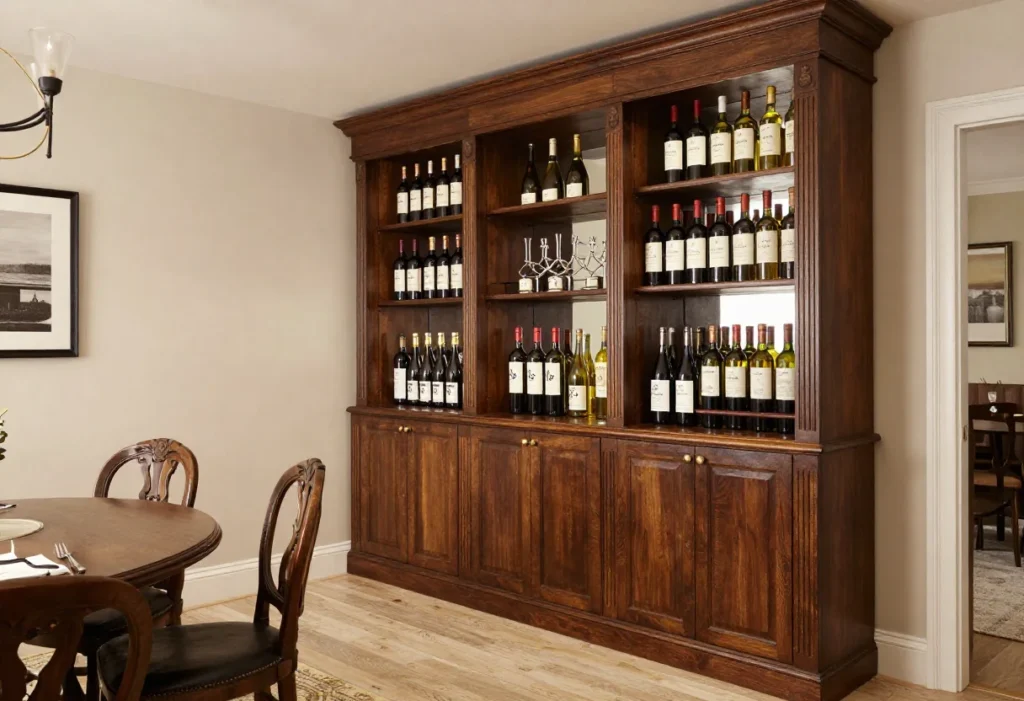
One of the most efficient ways to save space is to integrate your wine bar into existing furniture. Cabinets, bookcases, or sideboards near your kitchen or dining area can be retrofitted with custom racks, turning generic shelving into an organized, visually appealing wine station. For example, removing a section of a wardrobe or armoire and installing bespoke bottle racks, glassware slots, and accessory storage creates a polished, cohesive setup. This approach keeps everything tidy, accessible, and stylish while making use of furniture that might otherwise be underutilized.

Corner Wine Bar Nook
Corners are often overlooked, yet they offer a perfect opportunity for a compact wine bar. By building vertically, you can maximize storage without taking up valuable floor space. Place bottle racks at the lower levels for easy access, use the middle area for hanging glass stems, and add a narrow counter at the top for pouring or staging drinks. This type of setup makes even a small, awkward corner a functional and attractive feature in your home.

Close to the Kitchen
Positioning your wine bar near the kitchen or dining area enhances convenience, making serving drinks during meals and gatherings effortless. Even a simple arrangement—a narrow counter with a couple of shelves above—can function as a purposeful wine station. Proximity ensures everything you need is within reach while keeping the main kitchen counters free for meal prep.

Closet Conversion
For truly compact homes, converting a small closet into a wine bar is a highly effective solution. Tall shelving accommodates bottles of various sizes, while custom racks and cubbies organize stemware and accessories. By utilizing a hidden space, you maintain a clean, uncluttered look in your living areas while creating a dedicated, bespoke wine suite that’s easy to access whenever needed.

With these strategies, even a small space can be transformed into a functional, elegant wine bar that enhances both your home’s style and your daily enjoyment.

Smart Organization Tips

Now that you have space allocated, keeping your wine bar orderly and functional ensures it remains both practical and visually appealing over time. A few intentional organization strategies can make a noticeable difference in daily use and entertaining.

Group Bottles by Type
Organize bottles by category—reds, whites, rosés, and sparkling—to make selection effortless when preparing for a meal or hosting guests. Within each group, arrange bottles by size and shape to create visual symmetry and improve accessibility. If your collection includes favorite vintages or frequently served options, position them at eye level for convenience. This structured approach eliminates guesswork and enhances the overall presentation of your wine display.

Add Display Lighting
Strategic lighting enhances both function and ambiance. Installing soft LED strips beneath shelves or along rack edges helps illuminate labels, making it easier to locate specific bottles quickly. Warm, subtle lighting creates an intimate atmosphere that complements the elegance of a wine bar without producing harsh glare. Proper lighting also highlights the craftsmanship of your cabinetry and glassware, turning storage into a design feature.

Use Vertical Space
Maximize your storage capacity by extending racks or shelving units closer to the ceiling. Vertical organization allows you to store more without increasing your footprint. Reserve top shelves for items used less frequently, such as specialty decanters, backup bottles, or additional stemware. Keeping everyday essentials at accessible heights while utilizing upper areas efficiently ensures your wine bar remains streamlined and uncluttered.

Incorporate Temperature Control
Maintaining a stable temperature is essential for preserving wine quality. If your collection includes delicate or valuable bottles, consider integrating a compact climate-controlled unit into your design. Built-in wine refrigerators or cooling drawers protect against heat fluctuations and ensure optimal storage conditions year-round. Thoughtful temperature management not only safeguards your investment but also guarantees that each bottle is ready to enjoy at its best.

Stylish and Functional Design Features

A small home wine bar should do more than simply store bottle, it should elevate both usability and aesthetic appeal within your space. Thoughtful design elements can make even a compact setup feel intentional and refined. Integrated glassware storage, such as stem racks fitted beneath shelves or vertical slots built into side panels, makes smart use of often-overlooked vertical space while keeping your bar tidy and ready for serving. Including a modest serving counter or waist-height ledge adds valuable functionality, providing a dedicated surface to uncork, pour, rest tools, or assemble small plates without disrupting kitchen or dining areas. Finishes also play a key role in the overall impact.

Selecting woods, metals, or painted cabinetry that harmonize with your existing décor ensures the wine bar feels cohesive rather than added on. Whether you prefer warm wood tones for a classic look or sleek, modern finishes for a contemporary feel, material choices help anchor the design. Finally, deciding between open shelving and closed cabinetry shapes how the wine bar integrates into the room. Open storage offers visibility and easy access, turning your collection into a visual feature, while closed cabinets provide a cleaner, more concealed appearance. By balancing these elements carefully, a small wine bar becomes not just a storage solution, but a seamless and stylish extension of your home.

How Custom Wine Bars from Nova Closet Can Help

For tailored solutions, Nova Closet offers custom closet systems that can incorporate dedicated wine bar designs seamlessly into your home. These thoughtfully engineered systems provide structured storage for bottles, glassware, and accessories, ensuring everything has a defined place. Options range from streamlined bottle racks ideal for modest collections to fully developed compact wine bar spaces that maximize every inch of available square footage without overwhelming the room.

Homeowners can select from a variety of finishes, storage configurations, and integrated lighting solutions to match their personal style and functional needs. Whether you prefer warm wood tones, sleek contemporary cabinetry, or softly illuminated display shelving, each detail can be customized. Sizes and layouts are carefully adapted so the wine bar fits neatly into a small wall, pantry, alcove, or even a closet that might otherwise go unused. The result is a cohesive, space-efficient wine area that feels intentional, elegant, and perfectly suited to your home.

In Conclusion

Designing a small home wine bar can be both rewarding and highly practical when approached with thoughtful planning. By identifying the most suitable location whether it’s a corner nook, a built-in cabinet, or a converted closet and selecting the right structural components, you create a space that reflects both your personal style and the character of your collection. Careful organization ensures that bottles, glassware, and accessories are arranged with intention, making everyday use seamless and enjoyable.

Creative storage solutions, such as vertical racks, integrated glass holders, and compact serving surfaces, help you maximize limited square footage without sacrificing elegance. Focusing on efficient use of vertical space keeps your setup streamlined, while choosing finishes that complement your existing décor ensures visual harmony throughout your home. When these elements come together, your wine bar becomes more than a storage feature, it becomes a well-considered design element that enhances functionality, showcases your collection, and adds refined charm to your living space.

Ready to make lasting use of that spare corner, closet nook, or dining wall? Book a custom design consultation with Nova Closet today. Our team can help plan a wine bar that fits your space and storage needs with seasoned expertise. Reach out and begin creating an area designed for quality organization, effortless access, and comfortable enjoyment of your bottles.

Whether you imagine a sleek minimalist bar or a more traditional setup with room for accessories and glasses, a well-planned wine bar can become a cherished part of your home and daily routine.

Get free estimate